Skip to content

Identifying the right packaging machinery for your operations can significantly impact efficiency and costs. However, misunderstandings about the available types of packaging machinery often lead to poor investment decisions, such as choosing overly complex systems or neglecting integration challenges. By matching machinery to specific operational requirements, you can optimize packaging workflows and avoid costly mistakes.
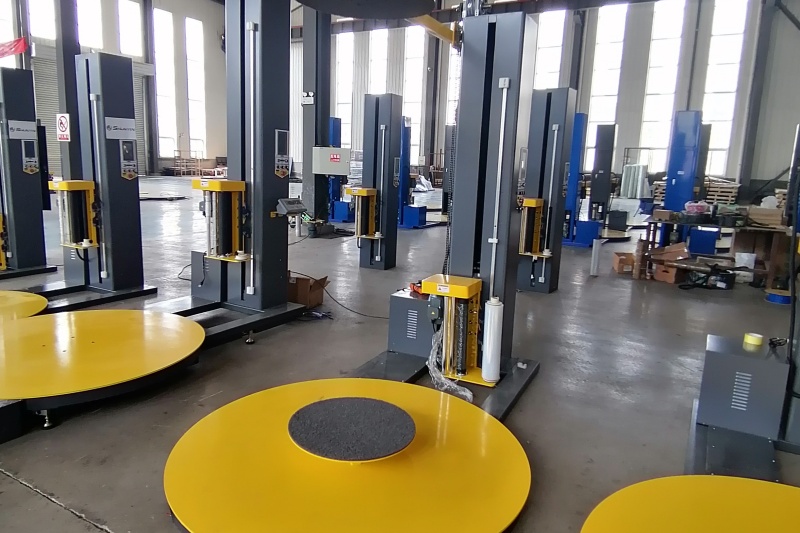
Packaging machinery comes in a wide variety of types, each suited to distinct packaging tasks, product types, and operational scenarios.1 The main categories include stretch wrapping machines, strapping machines, case erectors, carton sealers, case packing machines, baling presses, and palletizing robots. Careful selection should consider your industry's needs, production volume, and budget constraints.
Understanding the key categories below will help you align equipment with your goals, mitigate risks, and meet production requirements effectively.
What Are the Main Categories of Packaging Machinery?
Packaging machinery is categorized based on the function it performs in protecting, securing, or preparing goods for storage, transportation, or sale. Failing to understand these specialties might lead to operational inefficiencies.
The most common types of packaging machinery include:
- Stretch Wrapping Machines: For securing palletized goods.
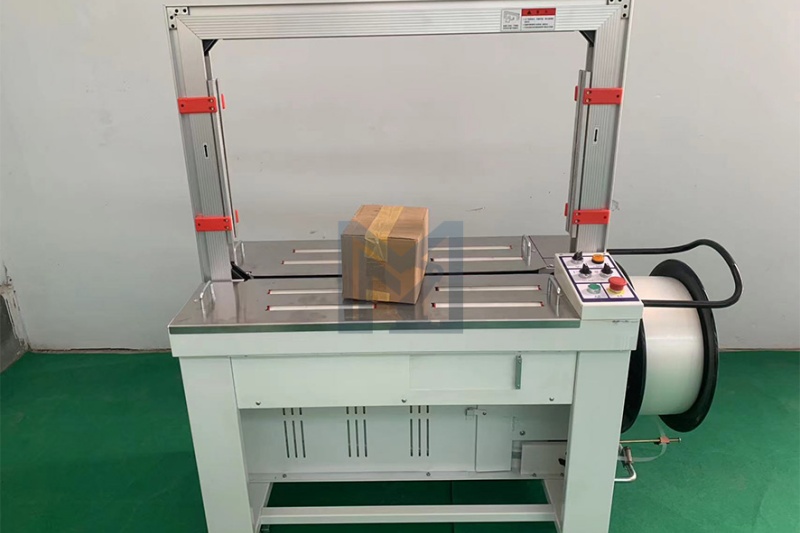
- Strapping Machines: For bundling or reinforcing packages.
- Case Erectors: For assembling carton boxes.
- Carton Sealers: For sealing filled cartons.
- Case Packing Machines: For placing products into boxes.
- Baling Presses: For compacting waste or recyclable materials.
- Palletizing Robots: For automating the stacking of goods onto pallets.
Each has its advantages and limitations, depending on production scale, materials handled, and environmental factors.
Why Misaligned Equipment Choices Reduce Value?
Choosing packaging machinery based purely on price or generic features often backfires.2 For instance, investing in high-speed carton sealers for a low-volume operation unnecessarily increases costs without delivering proportional benefits. Alternatively, underestimating machine compatibility with existing systems can result in costly delays. It's vital to evaluate both the current operational environment and upcoming production goals.
How Do Stretch Wrapping Machines Improve Logistics Operations?
Stretch wrapping machines are essential in logistics for stabilizing and protecting palletized goods during transport. A common mistake is assuming they are needed only for high-volume operations.
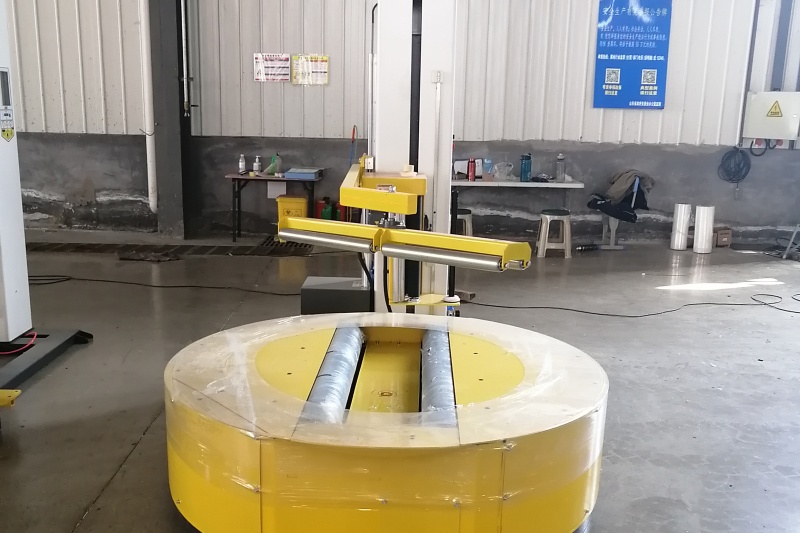
Stretch wrapping machines use stretch film to secure goods onto pallets, ensuring stability during shipping while protecting them from dust, moisture, and damage.3 They are indispensable for industries managing frequent shipments or storing bulk materials.
Tailored Solutions for Logistics Companies
In the logistics sector, where palletized cargo is standard, the choice of a stretch wrapping system can determine the speed and reliability of operations. For example, a mid-sized distribution center optimized its workflows by upgrading to a semi-automatic stretch wrapper. This change reduced manual film application time by 70% and decreased film waste.
Consider whether your operation needs automation. Fully automatic machines are ideal for high-throughput industries, but semi-automatic options balance performance and cost for lower-frequency applications.4
Is a Strapping Machine Right for Your Product Packaging?
Strapping machines are excellent for securing packages or bundling products, but not all materials or package forms can be easily strapped, leading to inefficiency in some cases.
Strappers work by applying tensioned straps around packages to secure their contents, making them ideal for heavy loads, irregularly shaped items, or shipping product bundles like wood planks or metal rods.5
Key Industries Using Strappers
A mid-size timber company that bundles wooden pallets utilized a manual strapping machine in its operations. When demand increased, the company shifted to a fully automatic strapping system, halving their packaging time while ensuring package integrity. Conversely, if your products are primarily lightweight and fragile, other machines, like tape-based carton sealers, might be more suitable.
Knowing your product type will help determine whether strapping machinery fits your situation or whether additional padding measures are needed.
What Makes Case Erectors & Sealers Crucial in Food Packaging?
Food production often demands high-speed packaging. Case erectors and sealers automate the folding, filling, and closing of cardboard boxes, ensuring hygiene and consistency. But the risk lies in assuming all machinery is identical.
Case erectors prepare flat-packed cardboard cartons, while carton sealers close and secure them after they are filled.6 Combined, they eliminate manual handling, improving efficiency in high-volume operations.
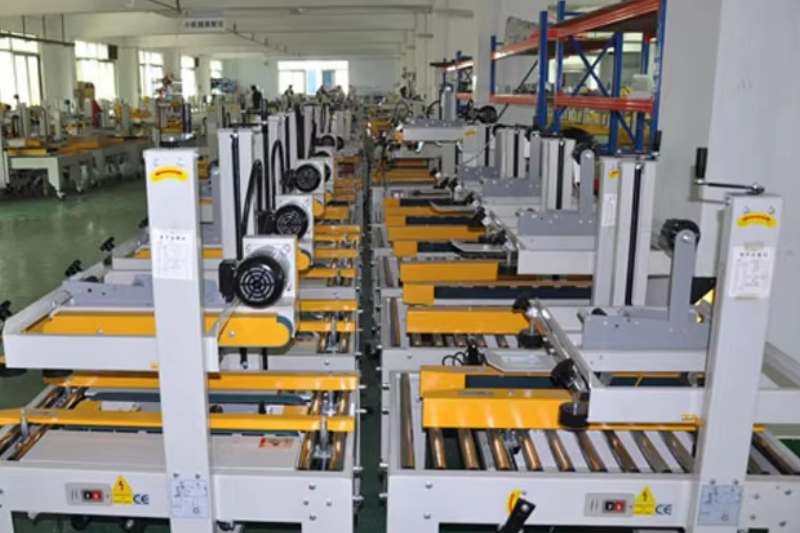
Practical Food Packaging Solutions
Take a small-scale bakery moving into wholesale distribution. Initially relying on hand-folded boxes, switching to entry-level case erectors cut labor costs while doubling output rates. However, larger operations may require advanced machines with adjustable configurations to transition between different box sizes seamlessly.
Understanding throughput requirements and product dimensions ensures you buy a machine at the right scale.7
How Should Baling Presses and Palletizing Robots Be Used in Industrial Environments?
Industrial settings like manufacturing plants and recycling centers often handle large volumes of material. Improperly selected equipment can create bottlenecks in these high-output environments.
Baling presses compact recyclable materials or industrial waste, while palletizing robots automate the stacking of goods onto pallets, optimizing storage and shipping.8
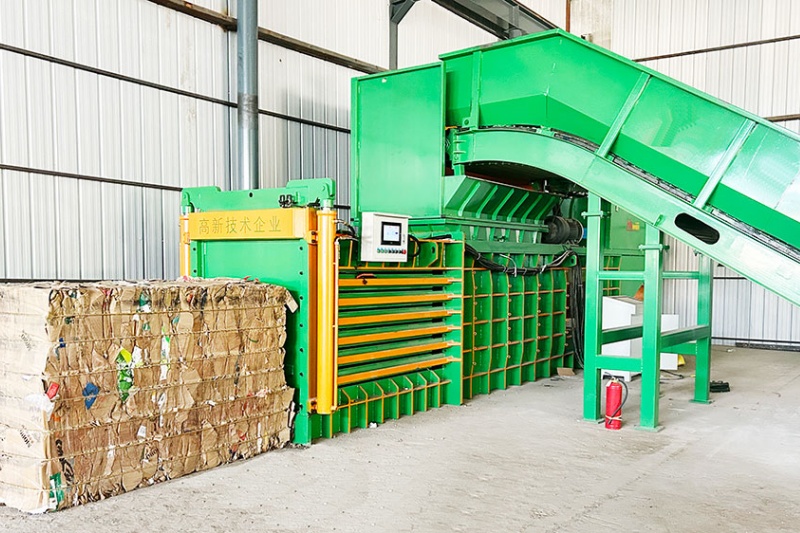
High-Volume Manufacturing Cases
In a cement plant processing heavy bags, a palletizing robot resolved inconsistent stacking issues and reduced manual labor strain. Similarly, a recycling center employing baling presses decreased the footprint of its waste storage by over 60%, solving warehouse congestion problems.
Before selecting such machinery, consult an engineer or supplier to confirm compatibility with materials, load constraints, and throughput levels.
Frequently Asked Questions
How do I decide which packaging machine suits my needs?
Start by analyzing your production volume, package material, product type, and any specific requirements like automation levels or integration with current systems. Consulting a supplier experienced in multiple industries ensures a tailored recommendation.9
Are automated machines better than semi-automated ones?
Automation reduces labor needs and boosts speed but increases upfront costs. Semi-automated options can offer a cost-effective solution for businesses with moderate throughput needs or those transitioning toward full automation.
What factors affect operational costs for packaging machinery?
Consider energy consumption, maintenance frequency, spare part availability, and film or strapping material usage. Neglecting these costs may diminish long-term financial gains.10
Do all packaging machines require special site conditions?
Most machines need a stable power supply and sufficient space for installation and operation.11 High-capacity equipment like palletizing robots may also require reinforced foundations.
What happens if I select the wrong type of machine?
Using incompatible equipment can lead to inefficiencies like production delays, increased manual handling, or even machinery breakdowns.12 This is why consulting professionals before purchase is critical.
Conclusion
Understanding the types of packaging machinery available—and the scenarios they suit best—is crucial for making informed procurement decisions. Whether you're automating pallet wrapping in logistics, securing products with strapping machines, or streamlining carton assembly in food production, tailoring equipment to your operational needs is essential.
If you're evaluating packaging solutions, I strongly recommend consulting a qualified supplier to ensure your investment aligns with both current and future production goals.
"Packaging machinery", https://en.wikipedia.org/wiki/Packaging_machinery. Packaging machinery is classified into various types based on their functions, including stretch wrapping, strapping, and palletizing, as noted in industry standards and encyclopedic references. Evidence role: general_support; source type: encyclopedia. Supports: The categorization of packaging machinery into distinct types based on tasks and operational scenarios.. ↩
"Pharmaceutical Packaging Solutions: A Practical Decision ...", https://blogs.bu.edu/kongta/pharmaceutical-packaging-solutions-decision-guide/. Experts agree that mismatched packaging machinery often leads to operational inefficiencies and increased expenses. Evidence role: expert_consensus; source type: education. Supports: Poor selection of packaging machinery can result in inefficiencies and higher costs.. Scope note: Specific impacts may vary by industry and production scale. ↩
"Post-wrapping behavior of high-performance stretch film", https://repository.rit.edu/cgi/viewcontent.cgi?article=1130&context=japr. Studies show that stretch wrapping improves pallet stability and provides a protective barrier against dust and moisture during shipping. Evidence role: mechanism; source type: research. Supports: Stretch wrapping machines stabilize goods and protect them from environmental factors during transport.. Scope note: Specific effectiveness may vary based on film quality and machine settings. ↩
"Systems and Equipment for Packaging and Price Marking Meat ...", https://ageconsearch.umn.edu/record/313400/. Research indicates that fully automatic machines are optimal for high-throughput operations, while semi-automatic systems offer cost-effective solutions for moderate production volumes. Evidence role: general_support; source type: research. Supports: Automation levels in packaging machinery should align with production needs and cost considerations.. Scope note: Cost-effectiveness depends on specific operational requirements. ↩
"Design of Automatic Strapping Machine of Express Box for ...", https://www.academia.edu/26916652/Design_of_Automatic_Strapping_Machine_of_Express_Box_for_Taobao_Sellers. Educational resources confirm that strapping machines are widely used for bundling heavy and irregularly shaped goods in industrial settings. Evidence role: general_support; source type: education. Supports: Strapping machines are effective for securing heavy and irregularly shaped items.. Scope note: Effectiveness may depend on strap material and machine type. ↩
"A Comprehensive Guide to Navigating the World of CBD Edibles", https://www.cogr.edu/sites/default/files/blog/?article=where-to-buy-just-cbd-gummies-a-comprehensive-guide-to-navigating-the-world-of-9ca3safe-cbd-edibles. Research highlights the efficiency gains from automating box preparation and sealing using case erectors and carton sealers. Evidence role: mechanism; source type: research. Supports: Case erectors and sealers automate box preparation and sealing processes.. Scope note: Efficiency improvements may vary based on production scale and box dimensions. ↩
"Design of a small scale cereal packaging machine suitable ...", https://www.academia.edu/70053277/Design_of_a_small_scale_cereal_packaging_machine_suitable_for_developing_countries. Educational resources emphasize the importance of matching machinery scale to throughput and product dimensions for optimal performance. Evidence role: mechanism; source type: education. Supports: Throughput and product dimensions are critical factors in selecting packaging machinery.. Scope note: Guidelines may vary by industry and machine type. ↩
"Baling-Press. - The Portal to Texas History", https://texashistory.unt.edu/ark:/67531/metapth858508/. Institutional studies confirm that baling presses reduce waste storage needs and palletizing robots streamline logistics operations. Evidence role: general_support; source type: institution. Supports: Baling presses and palletizing robots enhance waste management and logistics efficiency.. Scope note: Optimization depends on material type and throughput requirements. ↩
"The role of supplier performance evaluations in mitigating risk", https://digitalcommons.bryant.edu/cgi/viewcontent.cgi?article=1117&context=mark_jou. Institutional reports highlight the role of experienced suppliers in providing industry-specific machinery recommendations. Evidence role: expert_consensus; source type: institution. Supports: Supplier expertise is crucial for tailored packaging machinery recommendations.. Scope note: Effectiveness depends on supplier knowledge and industry scope. ↩
"Operating costs at four potato packing plants - AgEcon Search", https://ageconsearch.umn.edu/record/313776/files/mrr1072.pdf. Research shows that energy consumption and maintenance expenses are key factors in determining the ROI of packaging machinery. Evidence role: statistic; source type: research. Supports: Operational costs significantly affect the financial returns of packaging machinery investments.. Scope note: Cost impacts may vary by machine type and usage frequency. ↩
"Automated Packaging Systems Technician Required ...", https://www.northwoodtech.edu/academic-programs/degree-programs-and-certificates/automated-packaging-systems-technician/required-courses/. Educational guidelines confirm that packaging machinery requires stable power and adequate space for optimal operation. Evidence role: mechanism; source type: education. Supports: Stable power and sufficient space are essential for packaging machinery installation.. Scope note: Specific requirements may vary by machine type and size. ↩
"Converting and its effects on barrier properties of coated ...", https://bioresources.cnr.ncsu.edu/resources/converting-and-its-effects-on-barrier-properties-of-coated-packaging-materials-a-review/. Case studies demonstrate that mismatched packaging equipment often results in production delays and increased maintenance needs. Evidence role: case_reference; source type: research. Supports: Incompatible machinery can lead to inefficiencies and breakdowns in production environments.. Scope note: Specific impacts depend on the degree of incompatibility and operational context. ↩