Skip to content

Shrink wrapping is a vital step in many manufacturing and logistics workflows, ensuring that products are tightly secured and protected for storage or transportation1. If you're evaluating solutions for your packaging needs, you may wonder if automatic shrink wrapping machines are available — and whether they’re a suitable fit for your operations. The answer lies not only in availability but also in choosing the right machine for your specific requirements.
Yes, automatic shrink wrapping machines are widely available, ranging from fully automatic systems designed for high-volume operations to compact 2-in-1 models for smaller-scale needs. Deciding which type to invest in depends on your production volume, budget, and operational constraints.
When deciding between full-automatic and semi-automatic (2-in-1) machines, it’s essential to assess your throughput demands, the physical space in your facility, and your financial goals. Let’s explore these options to help you make an informed choice.
What are automatic shrink wrapping machines, and how do they work?
Shrink wrapping machines streamline the process of tightly encasing products in a layer of heat-shrink plastic, which contracts when exposed to heat2. But how automated is the process?
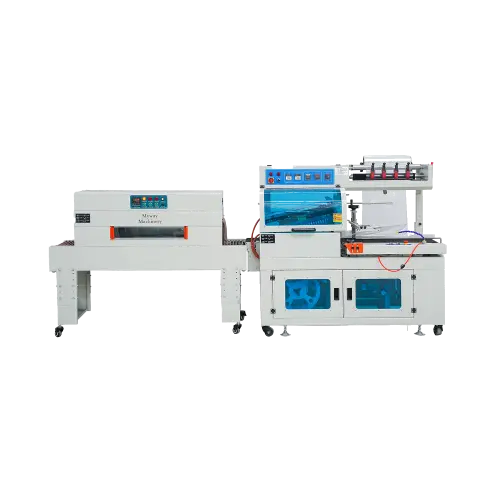
Automatic shrink wrapping machines are designed to perform product wrapping, film sealing, and heat tunnel processing without significant manual intervention. They are ideal for high-speed, high-volume environments like food packaging, pharmaceuticals, or industrial goods3.

Full-automatic machines feed items continuously, automatically cut the film, and transfer wrapped products into a heat tunnel. This is the gold standard for scaled operations. However, these machines come with trade-offs: they occupy more floor space and represent a higher capital investment.
Key benefits of full-automatic shrink wrapping machines:
- High throughput: Capable of processing hundreds of products per hour.
- Minimal labor input: Requires less manual oversight.
- Precision: Consistent wrapping quality, reducing errors or rework.
Nonetheless, before you decide that full automation is your best choice, consider whether your operation justifies such a high level of investment.
What about 2-in-1 shrink wrapping machines for smaller operations?
Not every factory needs maximum throughput, nor do all businesses have the space or funds for a full-automatic setup. That’s where 2-in-1 shrink wrapping machines come into play.
A 2-in-1 shrink wrapping machine combines manual film sealing and shrink wrapping in a single unit, making it an excellent, compact choice for small-to-medium manufacturers with moderate packaging requirements.
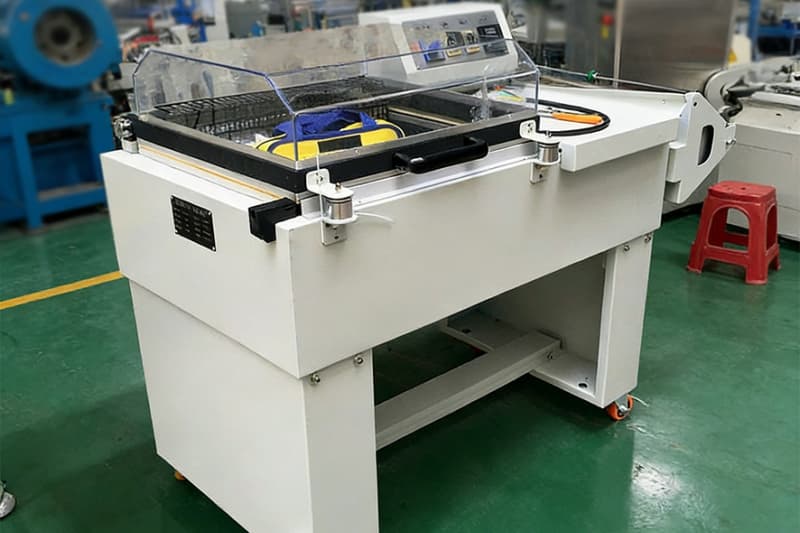
These machines require some manual handling, such as positioning the product inside the shrink film and closing the sealing arm. While slower than full-automatic options, they efficiently balance functionality and affordability.
Key benefits of 2-in-1 machines:
- Cost-effective: Significantly lower price point than full-automatic systems.
- Compact design: Fits in facilities with limited floor space.
- Versatile: Can handle a range of product sizes and shapes, with easy setup adjustments.
- Practical for lower volumes: Perfect for operations packaging fewer than 500 items per day.
For example, imagine a local bakery packaging 200 loaves of bread daily. A 2-in-1 shrink wrapper would meet their needs efficiently without the high costs associated with a full-automatic system.
How do I choose between full-automatic and 2-in-1 shrink wrapping machines?
The choice depends on balancing your priorities: throughput, budget, space, and long-term operational goals. Let’s break this decision down into practical considerations:
1. Production throughput needs
- If your daily production exceeds 1,000 units, a full-automatic machine offers the speed and efficiency to keep up with demand.
- For operations handling less than 500 units per day4, a 2-in-1 machine achieves productivity with much lower investment.
2. Factory space constraints
- Full-automatic lines often require distinct loading, wrapping, and heat-tunnel zones, consuming considerable floor space.
- 2-in-1 machines consolidate multiple tasks into a single footprint, making them optimal for smaller facilities.
3. Budget considerations
- Full-automatic solutions typically cost 2–3 times more than compact models but offer faster returns in high-volume settings.
- Small and medium businesses may find a 2-in-1 machine comfortably within budget, especially if automation isn’t critical.
4. Maintaining operational flexibility
- Full-automatic machines are often more specialized, making them less adaptable to frequent product or process changes.
- With a 2-in-1 machine, operators can quickly adjust settings for different products, offering greater versatility.
Comparing the solutions
| Criteria | Full-Automatic Machines | 2-in-1 Machines |
|---|---|---|
| Throughput | 1,000+ units/day | Less than 500 units/day |
| Automation Level | Fully automatic | Semi-automatic |
| Footprint | Large | Compact |
| Cost | High investment | Budget-friendly |
| Flexibility | Designed for specific applications | Easily handles diverse products |
Every machine type, no matter how advanced, comes with trade-offs. Before deciding, you should also weigh the factors that might influence total cost of ownership (TCO):
- Full-automatic machines: Higher maintenance needs due to their complexity5. Require trained operators and precise setups.
- 2-in-1 models: Slower for large-scale production. Operators must perform manual placement and sealing, which can add time and labor.
Frequently Asked Questions
Are full-automatic machines compatible with all production lines?
It depends. Full-automatic shrink wrapping machines typically need customized configurations to integrate with other processes, such as conveyors or sorting systems. Compatibility should be reviewed during supplier evaluation.
Can a 2-in-1 machine handle irregularly shaped products?
Yes, 2-in-1 shrink wrappers can be adjusted to accommodate varying shapes and sizes. However, heavily irregular products might require careful manual positioning or entirely custom solutions.
What is the ROI timeline for full-automatic machines?
For high-volume manufacturers, a full-automatic shrink wrapper can pay for itself within 1–3 years, depending on labor savings and operating efficiency. Assess your production scale to calculate specific ROI.
Does shrink wrapping only apply to certain industries?
Not at all. Shrink wrapping is widely used across industries, including food and beverage, e-commerce, industrial goods, and retail. Each industry, however, may have different performance, material, or automation needs.
What maintenance is required for 2-in-1 machines?
Routine maintenance includes cleaning debris from the sealing arm, inspecting the heat source, and replacing worn-out components like heating wires. Most tasks are manageable without specialized skill.
Conclusion
Automatic shrink wrapping machines, whether fully automatic or 2-in-1, provide efficient solutions for securing and packaging products. Full-automatic machines shine in high-speed, large-scale operations where throughput is key. In contrast, 2-in-1 machines suit small-to-medium manufacturers by balancing affordability, compact design, and operational versatility.
Ultimately, the best choice depends on your daily production volume, facility space, and budget. Need personalized recommendations? Let me help you select shrink wrapping machinery tailored to your requirements.
"How does plastic compare with alternative materials in ... - PMC", https://pmc.ncbi.nlm.nih.gov/articles/PMC11874595/. Shrink wrap packaging provides multiple protective functions including moisture barrier properties, dust and contamination prevention, load stabilization, and tamper evidence, making it suitable for storage and distribution applications. Evidence role: general_support; source type: research. Supports: the protective functions of shrink wrap packaging. Scope note: The degree of protection varies based on film material, thickness, and sealing quality; shrink wrap alone may not provide adequate protection for all product types or environmental conditions. ↩
"Shrink wrap", https://en.wikipedia.org/wiki/Shrink_wrap. Thermoplastic shrink films contract when heated due to the release of molecular orientation stress introduced during manufacturing, causing polymer chains to return to their relaxed state. Evidence role: mechanism; source type: research. Supports: the thermal contraction mechanism of shrink wrap polymers. Scope note: This describes the general mechanism; specific contraction rates vary by polymer type and processing conditions. ↩
"Shrink wrap", https://en.wikipedia.org/wiki/Shrink_wrap. Shrink wrapping is employed across diverse sectors including food and beverage (for tamper-evidence and shelf-life extension), pharmaceuticals (for product protection and regulatory compliance), and industrial goods (for bundling and weatherproofing). Evidence role: general_support; source type: research. Supports: the widespread adoption of shrink wrapping across multiple industries. ↩
"Packaging machinery", https://en.wikipedia.org/wiki/Packaging_machinery. Semi-automatic packaging systems are generally most cost-effective for small to medium operations with daily volumes ranging from dozens to several hundred units, where the flexibility and lower capital cost outweigh the labor requirements. Evidence role: general_support; source type: research. Supports: appropriate production volumes for semi-automatic packaging equipment. Scope note: Optimal equipment selection depends on multiple factors beyond volume, including product variability, available floor space, and growth projections. ↩
"On the Relationship between Software Complexity and ...", https://www.academia.edu/36522872/On_the_Relationship_between_Software_Complexity_and_Maintenance_Costs. Highly automated manufacturing equipment generally requires more frequent and specialized maintenance than simpler systems, due to increased component count, precision requirements, and integration complexity, though this is often offset by improved reliability and reduced unplanned downtime. Evidence role: general_support; source type: research. Supports: the relationship between automation complexity and maintenance requirements. Scope note: Actual maintenance requirements depend on equipment design quality, operating environment, utilization rates, and preventive maintenance program effectiveness. ↩