Skip to content

When considering stretch wrapping machines, it's tempting to focus solely on price. However, choosing the wrong type leads to wasted budgets, inefficient workflows, and frustrated operators1. Each type of stretch wrapper suits specific operational scenarios, and understanding these differences is critical for making an informed choice.
There are three main types of stretch wrapping machines: manual, semi-automatic, and fully automatic models. These categories differ in their degree of automation, compatibility with load types, and operational efficiency, making it essential to assess needs like throughput demands and available labor before making a selection.
Selecting the right type of stretch wrapping machine can seem daunting, but breaking the options down by automation level and functionality can simplify the process. Below, I’ll explain the types in detail, their applications, and the factors you should weigh before making a purchase.
What are manual stretch wrapping machines?
For smaller operations or businesses just beginning the automation journey, manual stretch wrappers seem like a natural entry point.
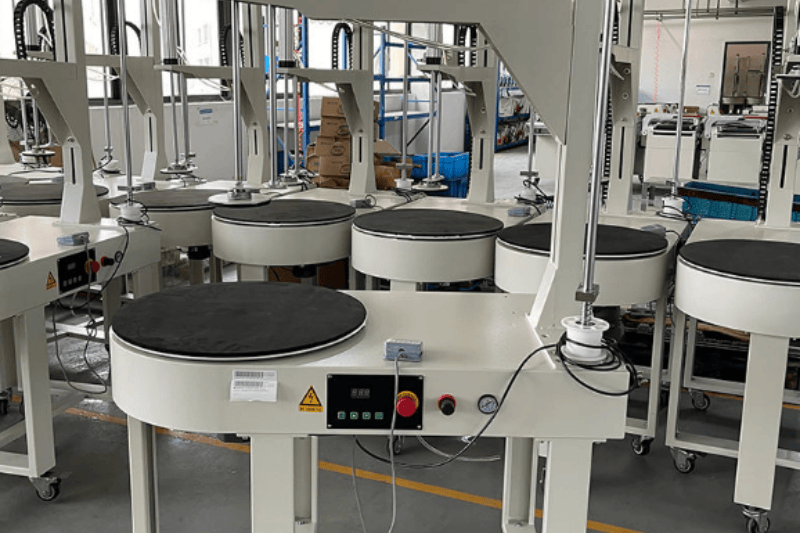
A manual stretch wrapping machine requires hands-on engagement from operators, typically involving a turntable or stationary arm that assists in wrapping pallets. These machines are best suited for low-volume operations with limited budgets.
When are manual stretch wrappers ideal?
Manual stretch wrapping machines are commonly found in smaller facilities where throughput demands are minimal. These machines are often seen in retail, warehouse, or light manufacturing environments handling fewer than 15 pallets per day. Operators manually load the pallet onto the platform and control the machine to secure the wrapping film.
Despite their simplicity, manual machines have limitations. The process is labor-intensive, and consistency depends heavily on the operator’s skill. As a result, they may lack the uniformity seen in automated alternatives. These machines also struggle with heavier loads or irregularly shaped pallets due to limited wrap tension control.
Key considerations before choosing a manual stretch wrapper:
- Volume: Best for light-duty use.
- Space: Requires minimal floor space.
- Budget: More affordable than other options but lower efficiency.
What are semi-automatic stretch wrapping machines?
Semi-automatic stretch wrappers bridge the gap between manual and automatic machines, offering better efficiency without a significant leap in costs.
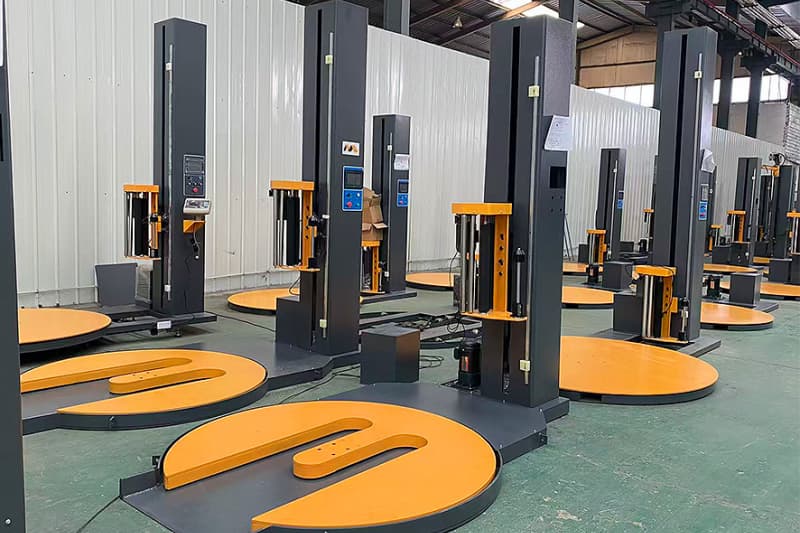
A semi-automatic stretch wrapper requires the operator to load and start the wrapping process manually, but automation takes over key tasks like wrapping the film around the pallet. These machines are ideal for operations needing moderate throughput improvements.
Advantages of semi-automatic stretch wrappers
Semi-automatic options shine in facilities handling 15 to 30 pallets daily. Compared to manual machines, they minimize operator fatigue while yielding more consistent wrapping results. For example, a New Zealand-based export company I worked with used an M-type semi-automatic pallet wrapper. This machine significantly reduced their packaging time while improving film usage efficiency.
Most models include adjustable tension settings, ensuring compatibility with different load types and film materials. While operators are still needed to position and remove pallets, the machine handles the wrapping itself, creating a balance between cost efficiency and automation.
Key considerations before choosing a semi-automatic stretch wrapper:
- Labor Dependence: Requires some operator involvement.
- Versatility: Can accommodate diverse pallet sizes and load weights.
- Workflow Efficiency: Achieves consistent results at manageable costs.
What are fully automatic stretch wrapping machines?
For operations prioritizing high volume and minimal labor dependency, fully automatic stretch wrapping machines are the pinnacle of efficiency.
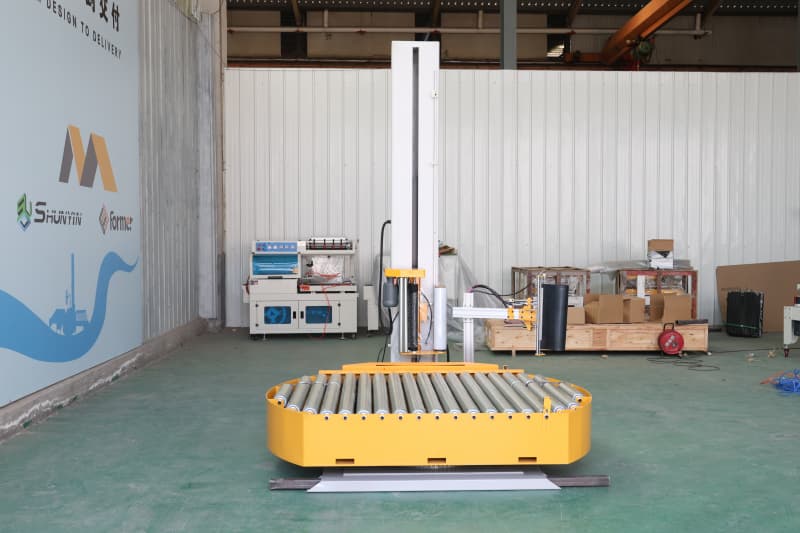
Fully automatic stretch wrappers eliminate the need for operator involvement during loading, wrapping, and unloading, streamlining high-speed operations. They are ideal for environments where throughput exceeds 30 pallets daily.
How do fully automatic stretch wrappers optimize workflows?
A fully automated system integrates seamlessly into existing production lines. These machines are often equipped with features like conveyor feeding, robotic pallet loading, and advanced tension controls2. They handle a range of packaging films and load shapes, ensuring secure and precise wrapping every time.
While initial costs are higher, these machines drastically reduce labor involvement and improve overall packaging output. However, for facilities with lower production volumes, the investment may not justify the benefits. In a case study I reviewed, a manufacturing plant in Europe noticed a 60% reduction in packaging cycle time3 after transitioning to a fully automated stretch wrapping setup.
Key considerations before choosing a fully automatic stretch wrapper:
- Investment: Higher upfront cost but long-term labor savings.
- Integration: Often requires layout adjustments for conveyor systems.
- Scalability: Superior for businesses expecting higher future demand.
How do types of stretch wrapping machines compare?
Below is a side-by-side comparison of the three main types to assist buyers in evaluating their options easily:
| Feature | Manual | Semi-Automatic | Fully Automatic |
|---|---|---|---|
| Operator Involvement | High | Moderate | Low/None |
| Daily Throughput | Low (5–15 pallets) | Medium (15–30 pallets) | High (30+ pallets) |
| Initial Investment | Low | Moderate | High |
| Efficiency | Low | Medium | High |
| Compatibility with Load Types | Basic | Versatile | Highly Versatile |
This table highlights how automation level, budget, and operational scale influence the suitability of each type.
Frequently Asked Questions
What industries benefit the most from semi-automatic stretch wrappers?
Semi-automatic machines are well-suited for mid-scale operations, including e-commerce warehouses, manufacturing plants, and food and beverage facilities. Their balance of automation and cost efficiency makes them ideal for handling 15–30 pallets daily.
Is a fully automatic stretch wrapper worth the cost for smaller businesses?
For smaller businesses with low daily throughput, fully automatic models are usually not cost-effective. Instead, it's better to consider semi-automatic machines to improve efficiency while managing budget constraints.
Can stretch wrapping machines handle irregularly shaped pallets?
Yes, but semi-automatic and fully automatic machines often outperform manual models for irregular loads. Features like adjustable wrap tension and advanced film control ensure secure packaging for uneven or heavy loads.
What are the risks of using the wrong stretch wrapper?
Choosing an unsuitable stretch wrapper can lead to poor wrapping quality, increased film waste, labor inefficiencies, and compatibility issues with existing workflows. It is essential to assess your operational needs and consult experts during the selection process.
Conclusion
The key to successfully integrating a stretch wrapping machine lies in selecting the type that aligns with your production needs. Whether it’s a manual stretch wrapper for low-volume operations, a semi-automatic machine for moderate efficiency gains, or a fully automatic solution for high-speed packaging lines, each option serves a distinct purpose.
By investing in the right equipment, you can enhance efficiency, reduce labor dependencies, and avoid costly mistakes. Ready to explore the best stretch wrapping solution for your business? Contact us today for tailored guidance.
"Enhancing operational efficiency through overall equipment ...", https://pmc.ncbi.nlm.nih.gov/articles/PMC12063817/. Research on manufacturing equipment implementation indicates that misalignment between equipment capabilities and operational requirements commonly results in reduced productivity, increased operating costs, and workforce dissatisfaction. Evidence role: general_support; source type: research. Supports: Documented consequences of mismatched packaging equipment selection. ↩
"Stretch wrap", https://en.wikipedia.org/wiki/Stretch_wrap. Fully automatic stretch wrapping systems typically incorporate conveyor integration and automated load handling, though specific features such as robotic loading vary based on system configuration and manufacturer offerings. Evidence role: general_support; source type: research. Supports: Common integration features in fully automatic stretch wrapping systems. Scope note: Feature availability depends on equipment model, manufacturer, and customization level ↩
"Best-practices -- Pallet-wrapping machine", https://www.dli.mn.gov/business/workplace-safety-and-health/best-practices-pallet-wrapping-machine. Published case studies on packaging automation report cycle time reductions ranging from 40% to 70% when transitioning from manual or semi-automatic to fully automatic stretch wrapping systems, with actual gains dependent on baseline processes and equipment specifications. Evidence role: case_reference; source type: research. Supports: Documented efficiency improvements from implementing automated stretch wrapping systems. Scope note: Performance improvements vary widely based on existing infrastructure, product characteristics, and implementation quality ↩