Skip to content

If you're asking, "What kind of machine can fold cardboard boxes?" the answer depends entirely on what you mean by folding. Do you need to erect flat blanks into 3D cartons? Form partially collapsed, pre-glued cartons? Or something else entirely? Each operation requires different machinery, and choosing the right one depends on your cardboard format, carton sizes, and production volume.
The term "folding" can describe multiple operations in the packaging process, so understanding your needs is critical. A case erector folds flat blanks into cartons, while a case former works with pre-glued collapsed cartons. Factors like box dimensions, speed requirements, and integration with other equipment will determine the ideal machine for your application.1
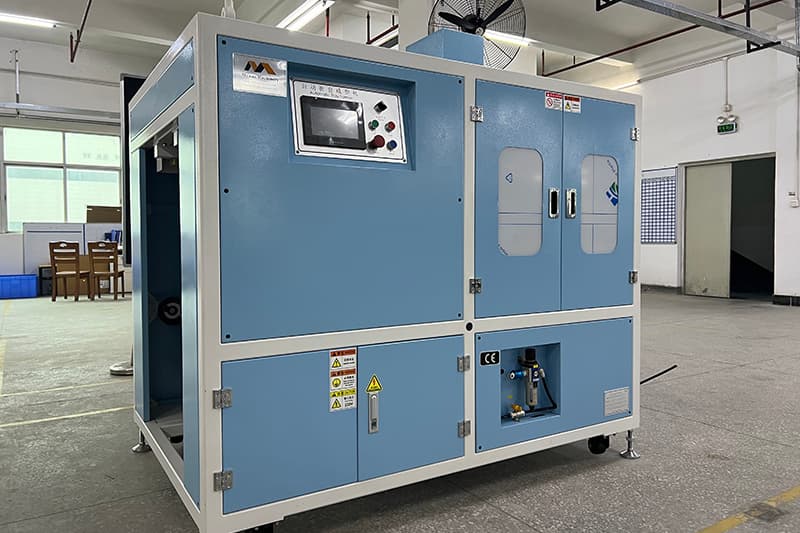
When customers ask me this question, my first response is usually a counterquestion: "What format does your cardboard currently take?" Here's why this clarification is crucial—and how it impacts your equipment selection.
Why does your cardboard format matter?
The problem most buyers face is assuming all "box folding" machines work the same. They don’t. Different machines handle different types of cardboard—and formats influence everything from machine selection to line integration.
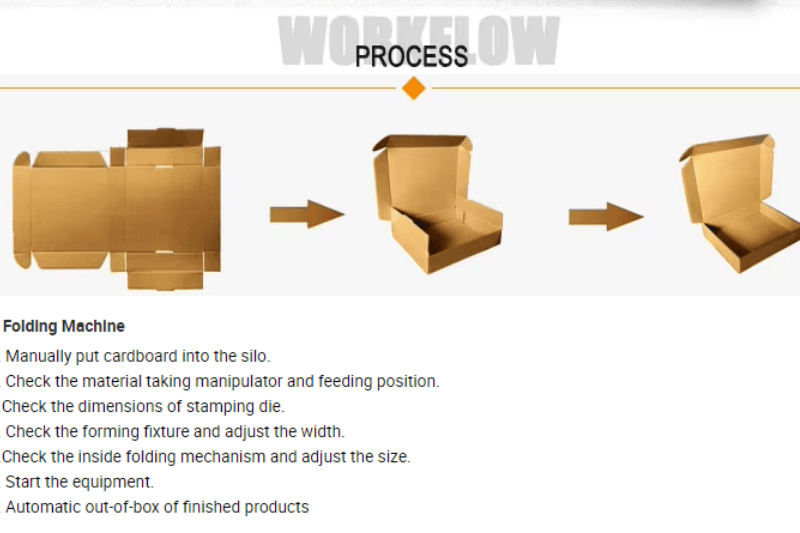
Case erectors handle flat cardboard sheets (called blanks), folding and sealing them into a 3D box. Case formers, on the other hand, work with RSC cartons—pre-glued but collapsed—and open them into a usable form. Each machine is designed for a specific task and can't easily switch roles.
Dive deeper: What’s the difference between erecting and forming?
At first, it’s easy to confuse case erecting and case forming. Both processes end in 3D cartons, but the types of cardboard they handle differ:
| Operation | Input Format | Output | Example Application |
|---|---|---|---|
| Case Erecting | Flat, die-cut cardboard blanks | Fully erected box, often sealed on one side | High-volume food or beverage manufacturers |
| Case Forming | Pre-glued, folded RSC cartons | Opened carton, ready for filling | E-commerce warehouses |
If your boxes start as flat blanks, you'll need a case erector. If you receive pre-glued, flattened cartons, a case former is the better fit. The starting cardboard format is the single biggest determinant in selecting the right machine.2
How does carton size and speed influence machine choice?
Not all machines handle every box size or speed requirement. Buyers often overlook how production volume and box dimensions limit equipment options.
Machines are tailored to specific use cases:
- Carton size range: Some machines specialize in small boxes, while others handle bulky cartons.3
- Speed or throughput: Basic models may process 15–20 cartons per minute, while high-speed lines demand equipment that can handle 50+ cartons per minute.4
Dive deeper: What happens when your needs are highly specific?
If you’re running a warehouse that handles diverse box dimensions, you might need machines with quick, tool-free adjustments for different sizes. In contrast, a beverage manufacturer churning out the same 12-pack boxes daily can invest in high-speed machinery optimized for a fixed format.
Semi-automatic models, where an operator feeds cardboard, are best for smaller-scale operations with variable sizes.5 Fully automatic systems, though pricier, eliminate manual handling and integrate seamlessly into high-throughput production lines.6
| Scale | Machine Type | Examples |
|---|---|---|
| Small-scale, variable | Semi-automatic case erector | Food delivery kits with custom box sizes |
| High-volume, consistent | Fully automated system | Beverage packaging on an automated line |
Every machine’s design must align with your workload and operational goals. Sending box dimensions and production targets to a machinery supplier will help them fine-tune their recommendations.
Should you consider standalone machines or fully integrated lines?
Another crucial decision is whether you need a machine to handle folding as a standalone operation or as part of a broader automated packaging line.
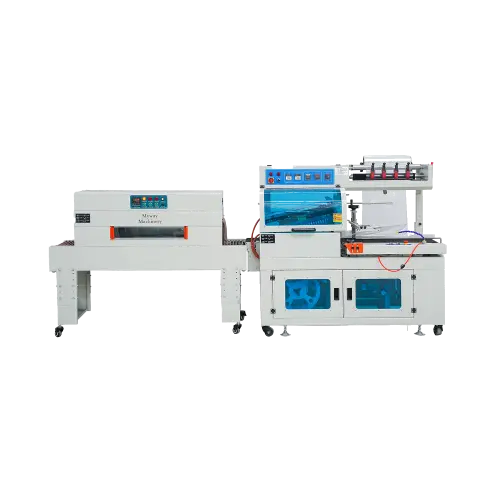
Standalone machines are common in smaller operations where folding is the only requirement. You’ll need manual or semi-automatic labor for upstream blank feeding and downstream sealing. However, as volumes increase, standalone setups often create bottlenecks.
Integrated lines combine box folding equipment with upstream blank feeders and downstream sealers, strappers, or palletizers. These systems streamline processes but require careful planning to ensure smooth integration.
Dive deeper: What are the trade-offs of integration?
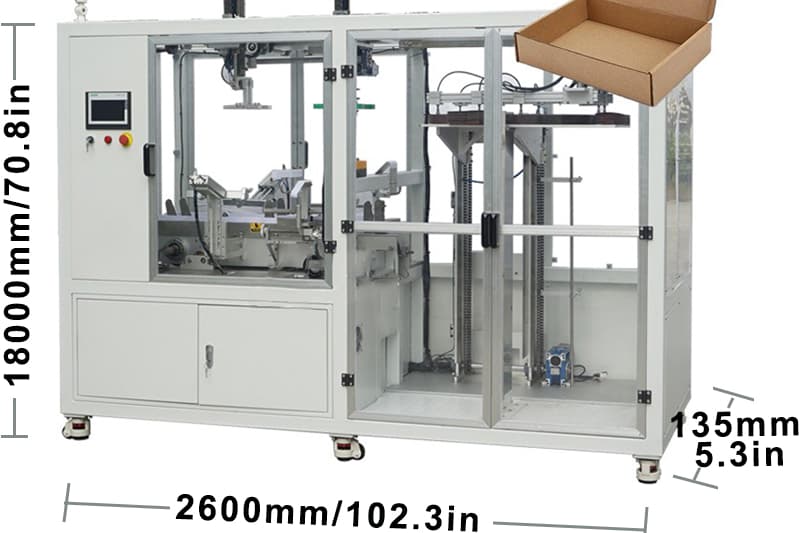
Integrating a case erector or former into an automated line eliminates gaps between processes, reducing labor and boosting efficiency.7 However, tight synchronization is essential. If your upstream conveyor jams or your strapping machine can't keep up, even the most advanced erector will sit idle and reduce productivity.
Some manufacturers discover this the hard way. They purchase a standalone erector only to realize later that it doesn’t align with peripheral equipment. Replacing or adding new components mid-stream is costly and disruptive.8
To avoid this, upfront planning is critical. I often tell clients: start with your end goal. Do you aim to reduce labor or cut waste? Is speed your priority, or do you need more flexibility for different box sizes? These decisions shape whether a standalone or fully integrated solution is best.
Common FAQs About Machines That Fold Cardboard Boxes
What’s the difference between a case erector and a case former?
A case erector folds flat cardboard blanks into 3D cartons, while a case former opens pre-glued, collapsed cartons into a usable shape. The type of cardboard you’re starting with determines which machine you need.
Can one machine handle all box sizes?
Not always. Most machines are designed for a specific size range. Some high-end models can adjust for multiple dimensions, but they may require manual setup or programming.
Are standalone machines less efficient than integrated systems?
Not necessarily. Standalone machines are efficient for low-volume or variable operations. However, for high-throughput production, integrated systems typically reduce labor and operational downtime.
How can I know if a machine is right for my application?
Begin by evaluating your cardboard format, box sizes, and production goals. Share these details with your supplier—they’ll recommend equipment designed to suit your specific needs.
Do these machines require regular maintenance?
Yes. Like all industrial equipment, case erectors and formers need routine checks, lubrication, and occasional part replacements to ensure reliable operation.
Conclusion
When deciding on a machine that folds cardboard boxes, the key is understanding your starting format (flat blanks vs. pre-glued cartons), your operational throughput, and how the equipment fits into your production workflow. A case erector is the go-to choice for flat blanks, while a case former works with collapsed RSC cartons. Machine size ranges, automation levels, and integration requirements also play vital roles in your decision.
If you're unsure where to start, share your carton specifications, production goals, and current challenges with a supplier. They’ll guide you to the right solution—ensuring your investment fits your needs both now and in the future.
"Important Factors for Selecting Food Packaging Materials ...", https://www.academia.edu/72967509/Important_Factors_for_Selecting_Food_Packaging_Materials_Based_on_Permeability. Selecting the right packaging machine depends on factors such as box dimensions, speed requirements, and compatibility with existing equipment, as noted in industrial engineering guidelines. Evidence role: general_support; source type: education. Supports: Box dimensions, speed requirements, and integration with other equipment are key factors in selecting the right machine.. ↩
"A History of Packaging | CFAES Knowledge Hub", https://cfaes.osu.edu/fact-sheet/history-packaging. The format of the cardboard, whether flat blanks or pre-glued cartons, is a primary factor in selecting suitable packaging machinery. Evidence role: general_support; source type: education. Supports: The starting cardboard format is a critical factor in determining the appropriate machine.. ↩
"Packaging Equipment - Scholars Junction", https://scholarsjunction.msstate.edu/cgi/viewcontent.cgi?article=1023&context=seedsmen-short-course. Packaging machines are often tailored to specific box sizes, with some models specializing in small cartons and others in larger, bulkier formats. Evidence role: general_support; source type: education. Supports: Some machines are designed specifically for small boxes, while others are optimized for bulky cartons.. ↩
"Automatic folding of cartons using a reconfigurable robotic ...", https://www.academia.edu/26362626/Automatic_folding_of_cartons_using_a_reconfigurable_robotic_system. Throughput rates for packaging machines vary, with basic models processing 15–20 cartons per minute and high-speed systems exceeding 50 cartons per minute. Evidence role: statistic; source type: education. Supports: Basic packaging machines process 15–20 cartons per minute, while high-speed models handle 50+ cartons per minute.. ↩
"(PDF) Electro-Pneumatic Portable Packaging Machine", https://www.academia.edu/102020168/Electro_Pneumatic_Portable_Packaging_Machine. Semi-automatic packaging machines are commonly used in smaller-scale operations, particularly when handling variable box sizes. Evidence role: general_support; source type: education. Supports: Semi-automatic models are suitable for smaller-scale operations with variable box sizes.. ↩
"Design of Servo Drive System for Automatic Packaging ...", https://ui.adsabs.harvard.edu/abs/2024inde.conf...24M/abstract. Fully automatic packaging systems are designed to reduce manual handling and integrate efficiently into high-throughput production environments. Evidence role: general_support; source type: education. Supports: Fully automatic systems eliminate manual handling and integrate into high-throughput production lines.. ↩
"PEARSON CASE ERECTOR MANUAL", https://old.lytlesrebc.edu/publication/imbENe6AD205/Pearson-Case_Erector_Manual. Integrating case erectors or formers into automated packaging lines can streamline processes, reducing labor requirements and enhancing overall efficiency. Evidence role: general_support; source type: education. Supports: Integrating case erectors or formers into automated lines reduces labor and improves efficiency.. ↩
"2025 North American Midstream Infrastructure Report", https://www.uh.edu/energy/research/energy-insights/2025-north-american-midstream-infrastructure-report.php. Mid-stream modifications to packaging lines, such as replacing or adding components, often result in significant costs and operational disruptions. Evidence role: general_support; source type: education. Supports: Replacing or adding components mid-stream in a packaging line is costly and disruptive.. ↩