Skip to content

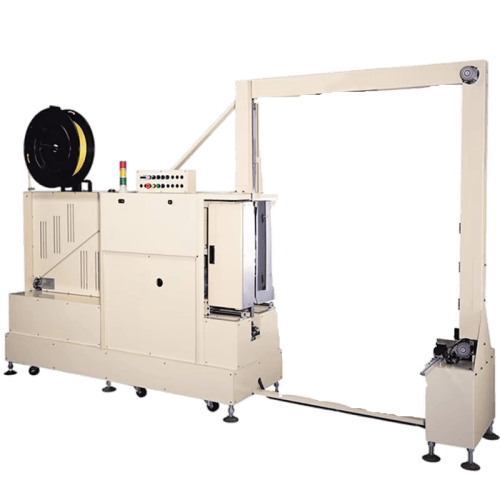
Pallet banding is critical in securing goods for storage and transportation, ensuring products remain stable and undamaged. An automatic pallet banding machine is a device that uses bands—typically made of plastic or steel—to secure products on pallets in a fully automated process. These machines are designed for industrial or logistics operations where speed, consistency, and minimal manual labor are priorities.
An automatic pallet banding machine automates the process of securing products onto pallets by applying and tightening bands for stability. Unlike semi-automatic models, it requires little to no human intervention, integrating seamlessly into high-volume production lines or distribution centers to improve throughput efficiency.
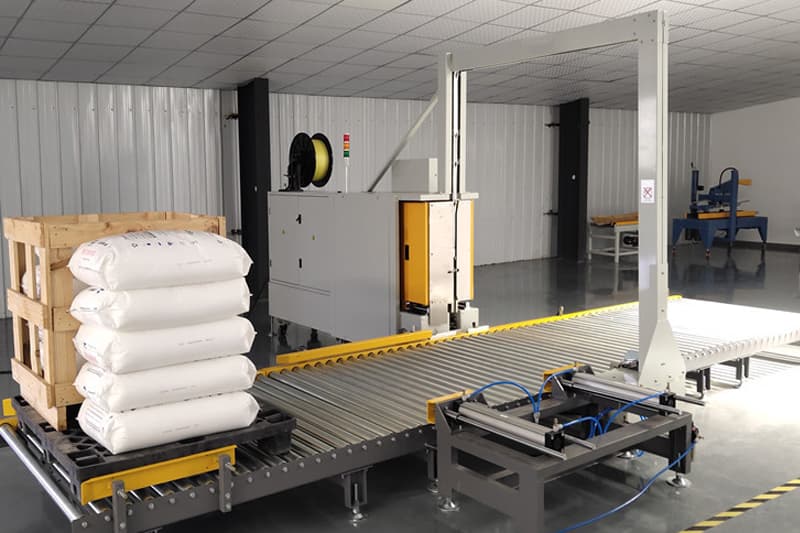
Whether you work in manufacturing or logistics, selecting between automatic and semi-automatic machines depends not just on automation preferences—it’s about aligning the machine’s features with your operational needs. Let’s dive deeper into their functionality and value.
How does an automatic pallet banding machine work?
Efficiency is the heart of automation. Automatic pallet banding machines streamline operations by reducing manual intervention.
An automatic pallet banding machine operates by securing pallets with tight bands automatically, eliminating the need for manual band threading or tensioning. It integrates with conveyors and other machinery, handling tasks like band feeding, tensioning, cutting, and sealing within seconds.
Diving deeper into their functionality:
These machines typically include:
- Automated band feeding: The machine feeds the band around the palletized products.
- Tension adjustment: Bands are tightened to precise tension levels to secure the load without damaging it.
- Sealing mechanisms: Bands are joined using heat welding or other sealing techniques.
- Integration capabilities: High-end models sync with production lines for uninterrupted packaging flows.
Industries like food and beverage, automotive parts, and large-scale logistics heavily rely on automatic pallet banding machines to increase throughput and reduce labor dependency. For example, in busy distribution centers, these machines help reduce bottlenecks by processing dozens of pallets per hour.
What are the advantages of automatic pallet banding machines?
Automation offers multiple benefits, which is why automatic models are often used in high-volume operations.
The key advantages of automatic pallet banding machines include improved consistency, higher output, and reduced labor requirements, making them ideal for large-scale factories and distribution centers.
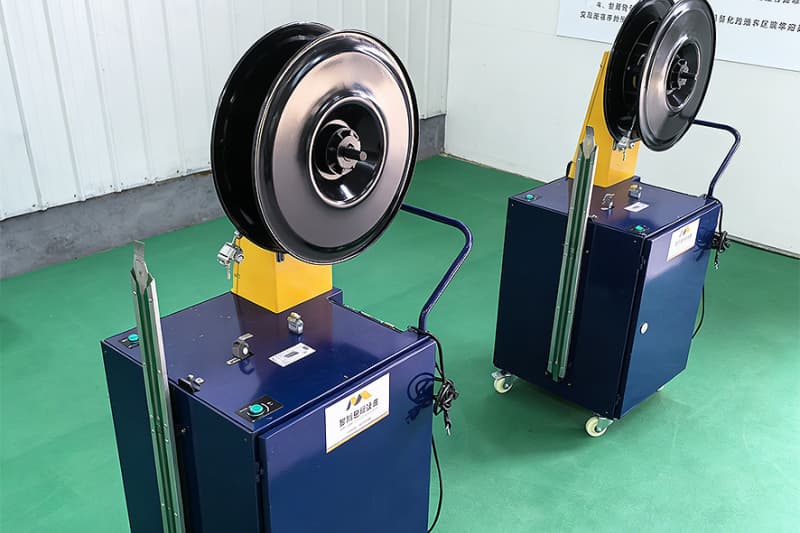
Key Benefits:
- Speed and throughput: Automatic machines minimize downtime by securing pallets in seconds, ideal for facilities processing hundreds of pallets daily.
- Consistency: Automated tensioning ensures stable packaging for every load, reducing risks of improperly secured products.
- Labor savings: Minimal supervision reduces the need for skilled operators, lowering operational and training costs.
- Workflow integration: They can seamlessly integrate with conveyors or robotic systems for fully automated pallet handling.
- Safety: Advanced systems reduce the risk of repetitive strain or injury from manual banding efforts.
For example, a leading manufacturer of beverage cartons deployed an automatic banding machine that boosted their daily pallet-securing capacity by 40%, decreased errors, and enabled reallocation of staff to other critical tasks.
Are there limitations to automatic pallet banding machines?
For all their advantages, these machines aren’t universally ideal. The limitations of automatic pallet banding machines include high upfront costs, maintenance requirements, and larger space needs, making them unsuitable for small-scale or budget-constrained facilities.
Potential Drawbacks:
- Capital investment: Automatic machines have higher purchase costs, which may not be justified for small operations.
- Space requirements: Their footprint can be significant, making them less feasible for facilities with tight layouts.
- Complexity and maintenance: Advanced automated systems require regular servicing by skilled technicians, which might increase long-term costs.
For smaller-scale manufacturers with seasonal production, a semi-automatic machine could be a more cost-effective choice, striking the right balance between efficiency and affordability.
How do automatic and semi-automatic pallet banding machines compare?
A common question is whether to invest in a fully automatic machine or opt for a semi-automatic alternative. The key differences between automatic and semi-automatic pallet banding machines lie in their level of automation, operational speed, and cost.
Comparing features:
| Feature | Automatic Machines | Semi-Automatic Machines |
|---|---|---|
| Automation Level | Fully automated, minimal human input | Requires manual band setup and threading |
| Speed | Handles high volumes quickly | Moderate speed, suitable for smaller-scale operations |
| Integration Capability | Fully integrates with production lines | Limited or manual workflow integration |
| Cost | High initial investment | Lower upfront cost |
| Space Requirements | Larger footprint | Compact size for smaller facilities |
| Best for | High-volume, large-scale operations | Medium to low-volume operations with budget constraints |
The choice isn’t just about budget—it’s a balance of volume, operational goals, and space. Logistics companies processing pallets sporadically may find a semi-automatic machine sufficient, while a manufacturing plant running 24/7 would thrive with automation.
When does an automatic pallet banding machine make sense?
Deciding whether to go automatic means aligning your machine selection with specific operational goals.
An automatic pallet banding machine is ideal for high-volume production lines, where speed, consistency, and minimal manual intervention outweigh the initial cost. Facilities with integrated packaging workflows stand to gain the most.
For example:
- Manufacturing plants with continuous outputs: Automatic machines ensure seamless pallet securing without interrupting production.
- Logistics hubs managing surges: Peak-season operations benefit from faster throughput.
- E-commerce warehouses: Automated systems help handle large daily pallet volumes efficiently.
Still, smaller warehouses, especially those with budget-oriented workflows, may find semi-automatic models better suited to their needs.
Frequently Asked Questions
How much does an automatic pallet banding machine cost?
Automatic pallet banding machines typically cost between $10,000 and $50,000, depending on features, customization, and brand. Factors like production scale, desired automation, and service requirements impact pricing.
Can automatic machines use both plastic and steel bands?
Yes, most automatic banding machines are designed to handle both materials, but it’s important to verify compatibility based on your load requirements and safety standards.1
What maintenance does an automatic pallet banding machine require?
Regular maintenance includes cleaning, checking band tracks, and ensuring tensioners and sealing devices function correctly.2 Most machines require annual inspections by a trained technician.
How does pallet size affect machine selection?
Certain automatic machines can handle variable pallet sizes, but it’s essential to confirm size compatibility during equipment evaluations. For non-standard pallets, customization is often needed.
Are these machines energy efficient?
Yes, many modern automatic pallet banding machines are engineered for energy efficiency, with standby modes or low-energy usage during idle times.
Conclusion
Automatic pallet banding machines offer speed, precision, and efficiency for high-volume operations, making them indispensable for manufacturing facilities and logistics hubs aiming to enhance productivity. However, they come with a higher investment and space requirement, which may not suit smaller-scale businesses. Choosing the right pallet banding machine means balancing cost, space, and operational needs to achieve optimal results.
If you’re evaluating packaging equipment for your facility, consider consulting with knowledgeable providers to assess your specific requirements. The right guidance can make all the difference.
"Steel Bandings as Guardrails.", http://www.osha.gov/laws-regs/standardinterpretations/1980-02-06. Research on industrial banding systems confirms that most automatic machines are compatible with both plastic and steel bands, subject to load and safety considerations. Evidence role: mechanism; source type: research. Supports: Most automatic banding machines can handle both plastic and steel bands, depending on load requirements and safety standards.. ↩
"Metal Strapping Materials on Pallets", https://www.federalregister.gov/documents/2002/07/24/02-18732/metal-strapping-materials-on-pallets. Educational guides on industrial equipment maintenance recommend cleaning, inspecting band tracks, and checking tensioners and sealing devices for optimal performance of automatic pallet banding machines. Evidence role: mechanism; source type: education. Supports: Regular maintenance for automatic pallet banding machines includes cleaning, checking band tracks, and ensuring tensioners and sealing devices function correctly.. ↩