Skip to content

Food packaging plays a vital role in preserving freshness, improving handling, and ensuring hygiene for consumer goods.1 A wrap machine for food can streamline these functions, but buyers often misunderstand the variety of applications and configurations these machines offer. From individual pastry wraps to bulk transport packaging, a wrap machine is all about precision and efficiency.
A wrap machine for food is designed to package food products securely, often using shrink film, stretch film, or other wrapping materials to protect items, ensure freshness, and ease transportation. These machines range from compact solutions for small bakeries to industrial systems for large-scale production lines.
Selecting the right wrap machine isn’t about a one-size-fits-all approach. Dive with me into the key considerations, machine types, and challenges to help you better understand this indispensable equipment.
What are the main types of food wrap machines?
Food wrapping equipment solves diverse packaging problems in food industries, large and small. But which type is right for your operation?
Food wrap machines generally fall into three categories: shrink wrap machines, stretch wrap machines, and strapping machines. Each serves unique purposes, like tightly shrinking film around bakery items, bundling stacked products, or securing cartons for transport.
Shrink Wrap Machines for Food Preservation
Shrink wrap machines use heat to shrink plastic film tightly around food products.2 This serves several purposes, including protecting the product from contamination, preserving freshness, and creating a clean, professional presentation.
- Applications: Ideal for bakery items, produce, and retail-ready products.
- Advantages: High protection, visual appeal, and extended shelf life.
- Considerations: Heat settings and film type must match the food’s characteristics.
For example, a bakery wrapping individual loaves can use a shrink wrap machine to achieve both an airtight seal and an attractive display. This adaptability is critical for reducing waste while improving packaging aesthetics.
Stretch Wrap Machines for Bulk Packaging
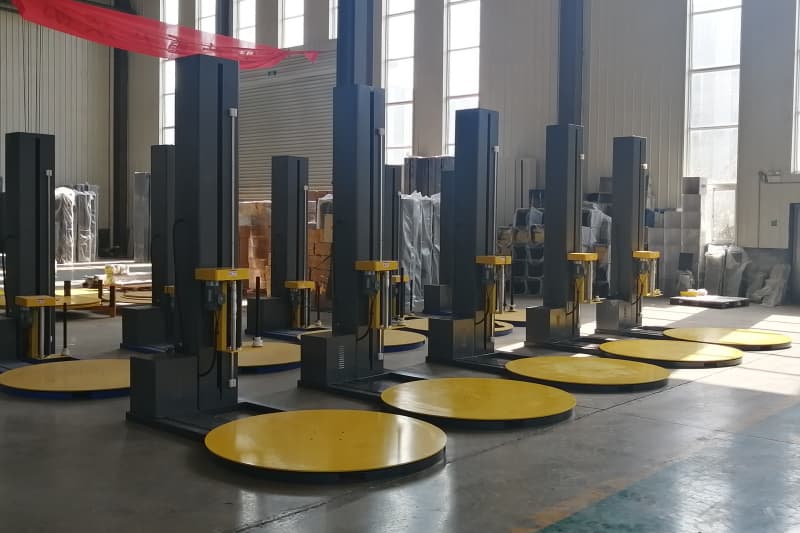
Stretch wrap machines secure products using a stretchable plastic film, often wrapped around pallets or grouped items. These machines are commonly used in logistics but are also valuable for bundling food products during transport.
- Applications: Bulk goods or palletized items, such as bottled beverages or food cases.
- Advantages: Improves transport stability and protects against dust and moisture.
- Considerations: Film tension and equipment size matter for proper application.
Small-scale producers underestimate the versatility of stretch wrap machines. One example is a factory wrapping boxed snacks for shipment — these machines minimize damage during transit while optimizing storage.
Strapping Machines for Added Security
Strapping machines bind cartons or products together with straps, offering additional security. These machines can complement other wrapping systems, especially where heavier loads or larger packaging is involved.
- Applications: Securing cartons, crates, or stacked boxes.
- Advantages: Firm packaging and suitability for heavy items.
- Considerations: Strap type and tension adjustments require attention.
For instance, a food distributor shipping pallets of fruit may pair strapping machines with stretch film. This dual approach ensures cartons stay sealed, even under transport stresses.
What factors impact the choice of a wrap machine for food?
Selecting the correct wrap machine isn’t purely about budget. It involves balancing operational goals, product specifications, and long-term efficiency.
Key factors include product characteristics, packaging volume, material compatibility, automation level, and available space. Buyers must prioritize these based on their specific operations and goals.
Product Characteristics
A food product’s size, weight, and fragility heavily influence machine choice. For example, stretch wrap machines work better for sturdy products, while fragile pastries demand shrink wrap systems for delicate handling.
Packaging Volume
High-volume manufacturers should consider semi-automatic or fully automated machines to boost productivity.3 Smaller enterprises or restaurants may favor compact, manual systems to reduce upfront investment.
Material Compatibility
Whether you’re using polyethylene shrink film or polypropylene strapping materials, compatibility matters. The wrong material can compromise hygiene standards and packaging quality.
Automation Level
Automated machines can revolutionize production lines, but manual systems remain practical for low-scale operations. Automation also affects costs, skill requirements, and maintenance.
Available Space
Manufacturers often overlook the spatial footprint of machinery. Ensure the layout accommodates machine dimensions and operator workflow.
How do food wrap machines address industry challenges?
The food industry faces consistent challenges, including perishable goods, high demand for hygiene, and competitive packaging presentation. Wrap machines serve as solutions to many of these pain points.
By offering consistent packaging quality, minimizing waste, and streamlining operations, food wrap machines directly address needs like product protection, operational efficiency, and compliance.
Hygiene and Safety
Food wrap machines designed for hygienic environments ensure compliance with industry standards.4 Shrink wrap machines, for instance, create a sealed barrier that minimizes exposure to air and contaminants.
Customization for Unique Production Goals
No two manufacturers share identical packaging requirements. Wrap machines can be tailored to meet diverse business goals, such as packaging bulk goods for transport versus creating retail-friendly packages.
An example I’ve seen firsthand involves a bakery that required individual pastry wraps for shelf display — a semi-automatic shrink wrap machine solved their problem while maintaining high output efficiency. This adaptability highlights how specialized equipment can fulfill nuanced goals without overspending.
Cost Efficiency
Automated wrapping lines enable bulk production with fewer operators, reducing labor costs. For smaller-scale operations, manual machines ensure cost-effective entry into professional packaging technologies.
Logistics Support
Food wrap machines simplify transport packaging, making it easier to stack, secure, and ship goods without needless damage or space issues.
Frequently Asked Questions
Can wrap machines be adapted for small-scale operations?
Yes. Smaller wrap machine models, such as tabletop shrink wrapper units, are perfect for small bakeries, cafes, or limited production settings. These systems balance functionality and affordability.
How long does a food wrap machine last?
With proper maintenance, many food wrap machines can operate efficiently for 10–15 years. Choosing machines with quality components and warranty options is essential for long-term reliability.
Do automated wrap machines require high-level technical skills?
Not necessarily. Many automated machines are designed for user-friendly operation, with training offered during installation. Regular guidance from suppliers can also simplify technical setups.
What materials do wrap machines use for food packaging?
Common materials include shrink film (polyethylene), stretch film (LLDPE), and strapping bands (polypropylene). Selecting the right material depends on the food’s preservation and handling needs.
Are food wrap machines customizable for specific products?
Yes. Many manufacturers offer customization services to adapt machines to the dimensions, hygiene requirements, and output goals of specific products.
Conclusion
Food wrap machines are vital for securing freshness, enhancing presentation, and optimizing transportation in industries ranging from bakeries to large-scale production facilities. The choice of machine should align with your specific packaging needs, product characteristics, and operational scale. With the right system, businesses can balance efficiency, compliance, and cost.
If you're evaluating food wrap machines for your business, let’s connect. I can help you navigate configurations and tailor solutions for your unique requirements. Whether you're upgrading existing operations or starting fresh, a precision-fit wrapping solution awaits!
"Role and Importance of Functional Food Packaging in ... - PMC", https://pmc.ncbi.nlm.nih.gov/articles/PMC9564204/. Research studies have shown that food packaging plays a critical role in maintaining product freshness, facilitating transportation, and ensuring hygiene standards in the food industry. Evidence role: general_support; source type: research. Supports: Food packaging contributes to freshness preservation, improved handling, and hygiene.. Scope note: The evidence may focus on specific types of packaging rather than all forms. ↩
"Shrink wrap", https://en.wikipedia.org/wiki/Shrink_wrap. Educational resources explain that shrink wrap machines apply heat to shrink plastic film, creating a tight seal around items for protection and presentation. Evidence role: mechanism; source type: education. Supports: Shrink wrap machines use heat to shrink plastic film around food products.. Scope note: The explanation may not cover all types of shrink wrap machines or films. ↩
"Best-practices -- Pallet-wrapping machine", https://www.dli.mn.gov/business/workplace-safety-and-health/best-practices-pallet-wrapping-machine. Research indicates that automation in food packaging significantly boosts productivity and reduces labor costs for high-volume operations. Evidence role: general_support; source type: research. Supports: Automated wrap machines improve productivity for high-volume manufacturers.. Scope note: The evidence may focus on specific industries or machine types. ↩
"Food Ingredients & Packaging", https://www.fda.gov/food/food-ingredients-packaging. Government guidelines on food packaging emphasize the importance of hygienic equipment in meeting industry standards for safety and contamination prevention. Evidence role: expert_consensus; source type: government. Supports: Food wrap machines ensure compliance with hygiene standards.. Scope note: The guidelines may vary by region or regulatory body. ↩