Skip to content

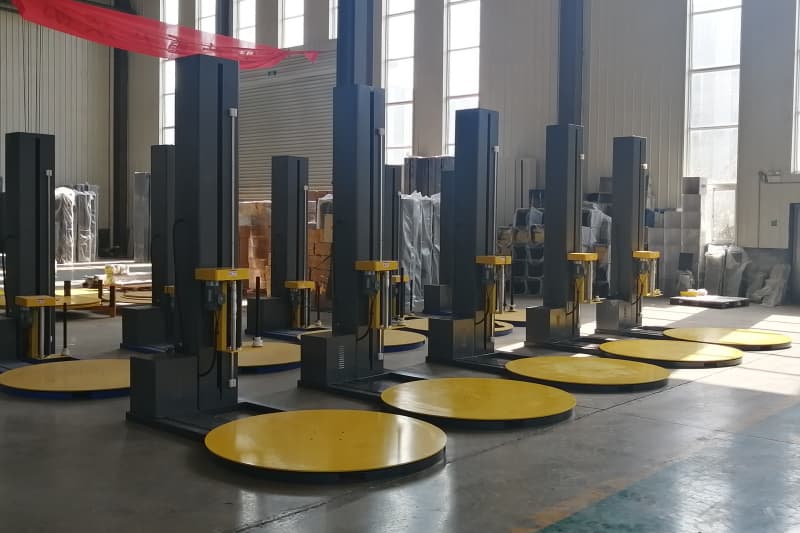
Industrial pallet wrapping machines are the backbone of efficient packaging operations, particularly for manufacturing and logistics businesses. These machines are used to securely wrap palletized goods for storage and transportation, minimizing the risks of damage and ensuring stability during handling. Selecting the right model, tailored to your unique application, is crucial for reducing costs and improving operational efficiency.1
What does an industrial pallet wrapping machine do?
Industrial pallet wrapping machines solve the common problem of transporting and storing palletized goods safely.
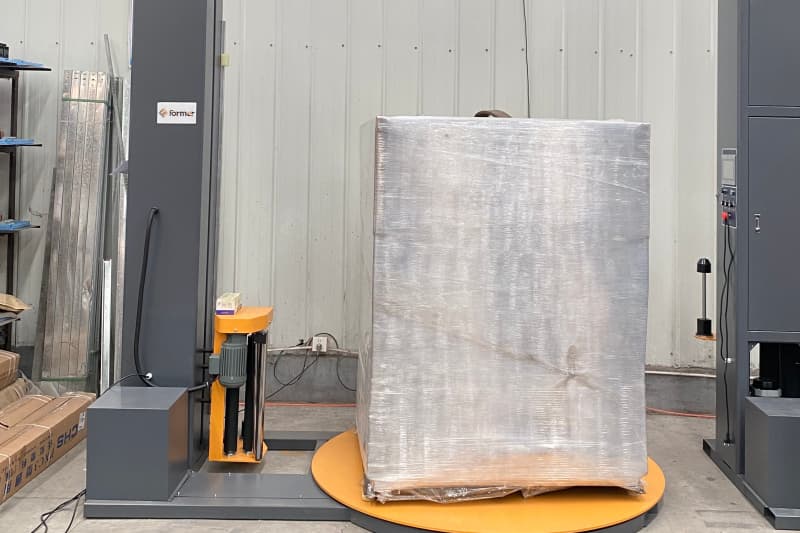
These machines apply stretch film around pallets to stabilize and protect the goods, reducing risks like shifting, breakage, or exposure to dirt and moisture.2 They streamline packaging operations and optimize material use, saving time and costs compared to manual wrapping.

The true advantage lies in their ability to stretch film efficiently, ensuring that each pallet is wrapped with minimal material waste while delivering the required durability and protection.
Why is stretch film consumption crucial?
Stretch film consumption affects not only material costs but also the overall efficiency of your packaging process.
High-quality pallet wrapping machines can stretch film up to 250–300%, significantly reducing film usage while maintaining adequate load security. Using poor-quality or incompatible films can undermine cost-efficiency, leading to waste and subpar wrapping results.
Evaluating stretch film efficiency
Many businesses overlook how stretch film quality and machine performance interact. Over the years, I’ve worked with clients who were frustrated by escalating material costs, only to discover that their machines weren’t designed to maximize film stretch ratios effectively.
When evaluating pallet wrapping machines, consider:
- The stretch ratio supported: Does the machine stretch film efficiently to minimize consumption?
- Film compatibility: Is the machine compatible with high-performance films that optimize material usage?
- Film tension control: Does the machine maintain consistent film tension to ensure secure wrapping?
Choosing a machine with this in mind can make a substantial difference in your cost structure over time.
How does automation improve efficiency?
Automation is a game-changer for pallet wrapping, especially for large-scale operations.
Automated pallet wrapping machines reduce labor costs by eliminating repetitive manual tasks, allowing operators to focus on higher-value activities.3 They also offer consistent wrapping quality and faster throughput, boosting overall productivity.
Key benefits of automation
Here’s what automation can bring to your packaging process:
- Speed: Fully automated machines can wrap pallets within minutes, enabling high-output operations.4
- Consistency: Machines ensure uniform wrapping quality, reducing the risk of poorly secured loads.
- Safety: Automation minimizes the ergonomic strain on employees, especially for heavy or frequent wrapping.5
- Cost savings: By optimizing film usage and reducing labor reliance, automated systems deliver long-term savings.
However, it’s essential to assess whether automation aligns with your specific needs. For smaller operations, semi-automatic machines might strike the ideal balance between upfront cost and efficiency.
What are the key types of pallet wrapping machines?
Industrial pallet wrapping machines vary significantly, catering to different operational scales and requirements. The three most common types include:
1. Semi-automatic pallet wrapping machines
Best for medium-scale businesses looking for efficiency while retaining operator control.
Semi-automatic machines require operators to load and start the wrapping process, but they save time and improve consistency compared to manual methods.
Advantages:
- Affordable upfront cost.
- Controlled automation without full reliance on machines.
- Ideal for operations with moderate throughput.
2. Fully automatic pallet wrapping machines
Suited for large operations demanding maximum throughput and minimal manual intervention.
With fully automated machines, pallets are loaded onto the conveyor, wrapped, and removed without operator involvement.
Advantages:
- Higher efficiency for high-volume operations.
- Reduced long-term labor costs.
- Consistent wrapping quality across all pallets.
3. Mobile pallet wrapping machines
Designed for flexibility when pallets cannot easily be moved to a centralized wrapping area.
Mobile machines offer portability, allowing operators to bring the wrapping machine to the pallets instead of the other way around.
Advantages:
- Excellent for operations with space constraints or irregular workflows.
- Adds convenience for dynamically shifting load locations.
| Type | Ideal Use Case | Key Benefits | Drawback |
|---|---|---|---|
| Semi-automatic | Medium-scale operations | Affordable, efficient | Requires operator input |
| Fully automatic | Large-scale operations | Maximum productivity | Higher upfront cost |
| Mobile | Flexible operations | Portable and convenient | Limited throughput compared to fixed models |
What are the top concerns when selecting a pallet wrapping machine?
Choosing the right pallet wrapping machine requires careful evaluation of your specific operational needs. Key factors to consider include:
1. Film compatibility
Ensure the machine supports the stretch ratio required for cost-efficient wrapping. Investing in suboptimal film can erode your long-term savings.
2. Load type and size
Different machines accommodate varying pallet dimensions and weights. Select a model that aligns with your standard load specifications.
3. Space availability
Machines vary in physical footprint. Be sure to choose equipment that fits seamlessly into your facility layout.
4. Throughput requirements
Match your machine’s capacity to your daily or hourly wrapping demands. Overestimating can lead to unnecessary expenses, while underestimating impacts productivity.
5. Maintenance and support
Ease of maintenance and access to technical support are critical for ensuring smooth operation and minimal downtime.
These factors all play into achieving long-term cost-efficiency, which is why I often advise clients to consider not just the upfront cost of a machine but its long-term savings potential.
Frequently Asked Questions
How much can pallet wrapping machines reduce film waste?
High-quality pallet wrapping machines can stretch film up to 250–300%, cutting material costs significantly.6 However, this depends on the machine’s compatibility with premium stretch films.
What’s the difference between semi-automatic and fully-automatic machines?
Semi-automatic machines require operator interaction for loading and initiating the wrapping process. Fully-automatic machines handle everything autonomously, ideal for high-volume operations.
How does pallet wrapping prevent damage?
Stretch film creates a tight, protective barrier around products during transportation and storage.7 This reduces the risk of shifting, breaking, or exposure to moisture and dirt.
Can I use a single machine for different pallet sizes?
Yes, many pallet wrapping machines are adjustable to fit various sizes. Confirm compatibility with your typical load dimensions before purchase.
Do automated machines require constant monitoring?
No, fully automated machines operate with minimal oversight. Regular maintenance checks are necessary, but day-to-day operation is hands-off for the most part.
Conclusion
Industrial pallet wrapping machines are indispensable for securing palletized goods during transportation and storage while driving down costs. Whether you’re looking to optimize material use, speed up operations, or enhance load safety, selecting the right machine tailored to your needs is critical. With proper evaluation—focusing on stretch film consumption, automation benefits, and compatibility—you can achieve long-term savings and efficiency.
Contact us to explore industrial pallet wrapping machine solutions that meet your operational goals!
"Best-practices -- Pallet-wrapping machine", https://www.dli.mn.gov/business/workplace-safety-and-health/best-practices-pallet-wrapping-machine. Studies on industrial packaging equipment have shown that tailored machine selection can optimize material use and reduce labor costs, leading to improved efficiency and cost savings. Evidence role: general_support; source type: research. Supports: Selecting the right pallet wrapping machine can reduce costs and improve operational efficiency.. Scope note: The findings may vary depending on the specific industry and operational scale. ↩
"Pilot Study of Stretch Film for Securing Palletized Loads - PMC", https://pmc.ncbi.nlm.nih.gov/articles/PMC12656129/. Research on stretch film applications in logistics demonstrates its effectiveness in minimizing product damage during transportation and storage. Evidence role: mechanism; source type: research. Supports: Stretch film stabilizes and protects goods by reducing risks like shifting, breakage, and exposure to dirt and moisture.. Scope note: Effectiveness may depend on the quality of the stretch film and the wrapping technique used. ↩
"Understanding the impact of automation on workers, jobs, ...", https://www.brookings.edu/articles/understanding-the-impact-of-automation-on-workers-jobs-and-wages/. Studies on automation in packaging industries highlight significant labor cost reductions and productivity improvements due to reduced manual intervention. Evidence role: general_support; source type: research. Supports: Automated pallet wrapping machines reduce labor costs and improve productivity by reallocating operator focus.. Scope note: The extent of benefits may depend on the scale of operations and machine type. ↩
"Best-practices -- Pallet-wrapping machine", https://www.dli.mn.gov/business/workplace-safety-and-health/best-practices-pallet-wrapping-machine. Industry reports indicate that fully automated pallet wrapping machines can achieve wrapping speeds of under two minutes per pallet, supporting high-volume operations. Evidence role: statistic; source type: research. Supports: Fully automated pallet wrapping machines can wrap pallets quickly, enabling high-output operations.. Scope note: Performance may vary based on machine model and operational conditions. ↩
"A scoping review on emerging technologies and automation ...", https://pmc.ncbi.nlm.nih.gov/articles/PMC12447851/. Ergonomic studies in industrial settings confirm that automation reduces physical strain associated with repetitive tasks like manual pallet wrapping. Evidence role: expert_consensus; source type: research. Supports: Automation reduces ergonomic strain on employees by minimizing repetitive manual tasks.. Scope note: The degree of ergonomic improvement may depend on the specific tasks automated. ↩
"Pilot Study of Stretch Film for Securing Palletized Loads - PMC", https://pmc.ncbi.nlm.nih.gov/articles/PMC12656129/. Economic analyses of packaging systems show that machines achieving stretch ratios of 250–300% can lower film consumption and associated costs. Evidence role: statistic; source type: research. Supports: High stretch ratios in pallet wrapping machines reduce material costs.. Scope note: Savings depend on film quality and operational scale. ↩
"Pilot Study of Stretch Film for Securing Palletized Loads - PMC", https://pmc.ncbi.nlm.nih.gov/articles/PMC12656129/. Logistics research confirms that stretch film provides a protective layer, reducing exposure to environmental hazards and physical damage. Evidence role: mechanism; source type: research. Supports: Stretch film creates a protective barrier around products during transportation and storage.. Scope note: Effectiveness may vary based on film type and wrapping technique. ↩