Skip to content

Rotary arm stretch wrappers are a game-changer for companies aiming to optimize automated, high-volume packaging operations. These machines excel at handling unstable or heavy loads, efficiently applying stretch film with a stationary arm mechanism. But to truly leverage their advantages, businesses must carefully assess operational requirements, spatial considerations, and optional features like automatic film cutting.
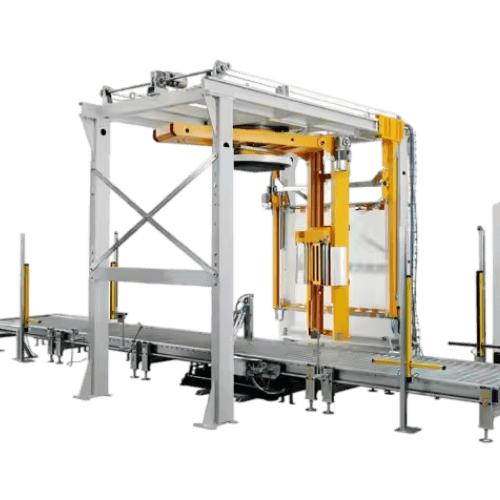
Rotary arm stretch wrappers use a stationary wrapping mechanism to efficiently wrap unstable or heavy loads. The arm rotates around the load to apply stretch film while the pallet remains stationary, making them ideal for continuous, high-speed operations in manufacturing facilities and logistics spaces.

Because these machines offer advanced automation capabilities, understanding their technical nuances and installation considerations is essential before investing in one. Let’s break down their operation, the benefits they bring, and challenges buyers should anticipate.
What makes rotary arm stretch wrappers unique?
Rotary arm stretch wrappers solve a recurring packaging dilemma: how to wrap pallets quickly without compromising load stability. Their stationary, non-rotating load mechanism provides unmatched versatility, especially for unstable products.
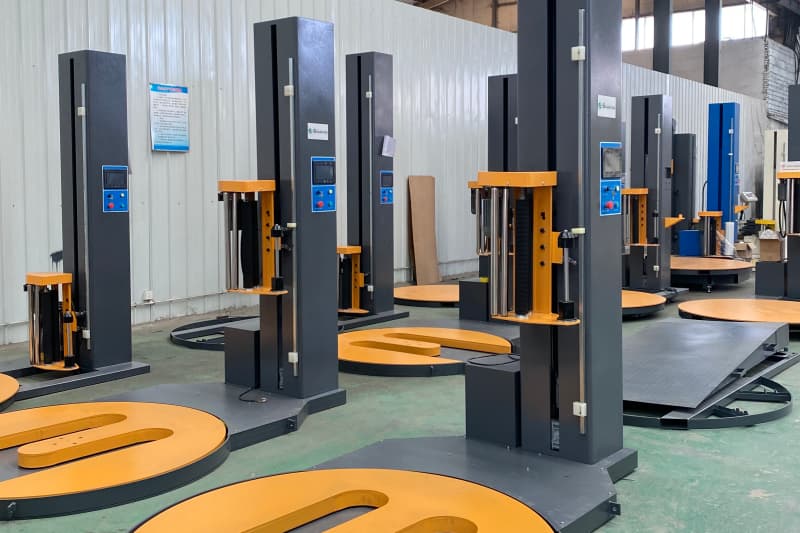
Unlike turntable wrappers, rotary arm stretch wrappers keep the pallet stationary while a rotating arm moves around it to apply stretch film. This eliminates load rotation, ensuring fragile or irregular items stay secure throughout the wrapping process.

Dive deeper: Efficiency with fragile or heavy loads
Rotary arm wrappers shine in scenarios involving:
- Unstable products: Tall or uneven loads prone to tipping during rotation benefit from the wrap-and-hold method, ensuring film is uniformly applied without destabilizing the pallet.
- Heavy pallets: Loads weighing over the capacity of turntable wrappers are easily handled, since the pallet remains fixed during wrapping operations.
- Fragile goods: Items sensitive to excessive movement, such as glassware or light stacked products, are securely packaged without risk of damage during rotation.
By combining these qualities, rotary arm models reduce downtime tied to repacking damaged loads, improving overall throughput. Some users have reported gains of up to 20% in daily packaging speeds1 compared to turntable alternatives.
How do automation features like auto film cutting enhance productivity?
Rotary arm stretch wrappers often incorporate automation features to maximize efficiency in high-output operations. Automatic film cutting is one such example, simplifying workflow transitions between wrapped pallets.
With auto film cutting, the machine cleanly cuts and seals the stretch film at the end of a wrapping cycle, eliminating manual steps and reducing labor costs in facilities aiming for continuous operation.

Dive deeper: ROI for automation features
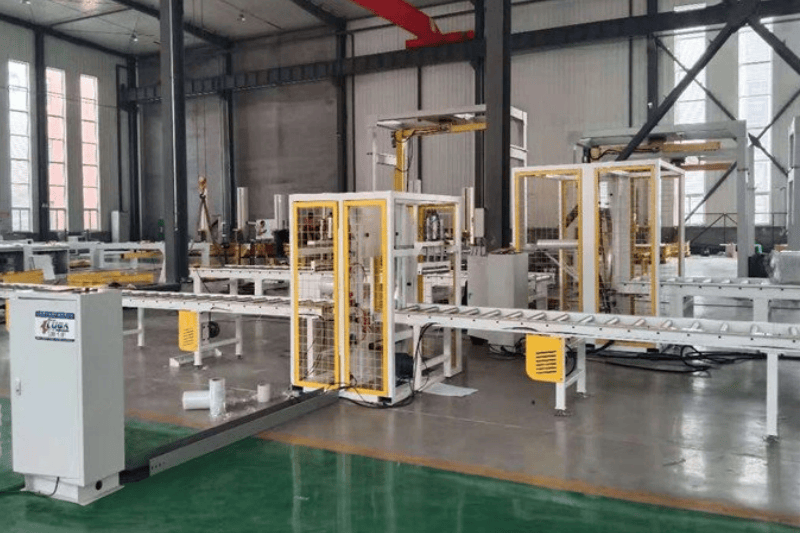
For companies running conveyor-integrated rotary arm stretch wrappers, auto film cutting delivers tangible benefits:
- Reduced manual intervention: Operators are no longer needed for film handling after each cycle, freeing time for other tasks.
- Improved production speeds: Pallets transition seamlessly to unloading or the next operational stage without interruptions, ideal for facilities handling hundreds of pallets daily.
- Consistent results: Automated cutting ensures precision, reducing film wastage and saving operational costs over time.
However, buyers should weigh additional costs tied to film-cutting automation against their expected throughput volumes. In smaller setups or low-volume environments, the feature may not justify its expense. Maintenance considerations also come into play; some users report downtime linked to automated systems requiring recalibration.
Is space a challenge for rotary arm stretch wrapper installation?
Yes, rotary arm stretch wrappers have specific spatial requirements that buyers must plan for. Unlike compact turntable wrappers, rotary arm models need additional clearance for the rotating arm and integration with conveyor systems.
Proper installation involves analyzing facility layout to allocate sufficient space not only for the machine but also for load staging, conveyor integration, and operator access.

Dive deeper: Resolving spatial constraints
Here’s how I’ve seen this issue resolved in real applications:
- Pre-installation mapping: Customers in tight warehouse environments often invest in layout design services to optimize wrapping station placement and ensure smooth conveyor traffic flow.
- Vertical configurations: Facilities with limited floor space sometimes prefer rotary arm models designed for higher ceiling clearance to minimize footprint while accommodating tall pallets.
- Remote testing: Before commissioning, it’s common to test functionality remotely (via pre-shipment trials) to confirm machine dimensions align with working conditions.
For example, a beverage manufacturing facility I worked with managed to fit two rotary arm wrappers into an already congested packaging line by redesigning conveyor pathways and using compact rotary arm bases. Advanced planning made it possible to triple their daily pallet throughput without disrupting workflow.
What operational scenarios are ideal for rotary arm wrappers?
Rotary arm stretch wrappers are best suited for automated environments requiring consistent, high-speed pallet wrapping. Their strengths lie in settings such as:
- Large-scale manufacturing plants producing dozens of pallets per hour with diverse load types.
- Logistics hubs where conveyor systems demand seamless equipment integration for frequent loading and unloading.
- Food and beverage facilities with fragile or irregular products needing secure packaging standards.
These machines are particularly powerful in applications demanding load stability, continuous output, or conveyor-based pallet handling workflows that alternative wrappers struggle to meet.
Dive deeper: Common use cases
Here’s a breakdown of where rotary arm wrappers excel:
| Industry | Applications | Advantages |
|---|---|---|
| Manufacturing | Uniform tall pallets | Avoid load rotation instability |
| Logistics and Warehousing | Conveyor-based automation | Continuous operation and integration |
| Food and Beverage | Fragile packaging solutions | Secure wrapping with reduced product movement |
For smaller operations or manual workflows, simpler turntable systems may suffice. But when handling complicated logistics or large-scale production, rotary arm wrappers drive significant efficiency gains.
Frequently Asked Questions
Does a rotary arm stretch wrapper require more maintenance than a turntable wrapper?
Yes, generally speaking. Rotary arm models involve more moving parts, including automated features like film cutting, which may require periodic adjustments and servicing. However, these systems often include robust build designs that minimize downtime.
Can rotary arm stretch wrappers be used without conveyors?
Yes, they can operate without conveyors for standalone applications. However, their full productivity potential is unlocked in conveyor-integrated systems as part of automated packaging lines.
How much space is needed to install a rotary arm stretch wrapper?
It depends on the model, but rotary arms typically require clearance for a rotating arm, load staging areas, and conveyor integration. Pre-installation site assessments are recommended to confirm space availability.
Are rotary arm stretch wrappers energy-efficient?
Most rotary arm wrappers optimize energy consumption by using programmable systems to reduce excess motion and film usage. Energy efficiency varies by model and automation features.
What is the typical cost range for a rotary arm stretch wrapper?
Costs vary widely depending on automation features, specifications, and optional add-ons. Standard base models may start around $20,000, while fully automated conveyor-integrated units can reach $50,000 or higher.
Conclusion
Rotary arm stretch wrappers are purpose-built for high-output environments requiring stable, efficient pallet wrapping capabilities. Their stationary wrapping mechanism makes them ideal for handling unstable or heavy loads, while features like automated film cutting streamline production further for operations where speed and precision matter.
However, they’re not without challenges. Proper installation requires ample space, strategic layout planning, and a clear assessment of optional features’ impact on ROI. If you're considering adding a rotary arm stretch wrapper to your facility, ensure it's tailored to your productivity goals and spatial constraints.
Ready to explore automated wrapping solutions? Contact us today for machine recommendations, layout planning, and pricing tailored to your business needs!
"New research finds that certain packaging materials can show ...", https://msutoday.msu.edu/news/2025/02/new-research-certain-packaging-materials-can-show-70-percent-lower-emissions-than-alternatives. Research has shown that rotary arm stretch wrappers can achieve significant speed improvements over turntable models, with some studies reporting gains of up to 20%. Evidence role: statistic; source type: paper. Supports: The source should provide statistical evidence supporting the claim of speed gains with rotary arm stretch wrappers.. Scope note: The reported gains may depend on specific operational contexts and load types. ↩