Skip to content

Stretch wrapping is a critical aspect of packaging and logistics, and selecting the right machine can make or break operational efficiency. A semi-automatic stretch wrap machine can often bridge the gap between cost-effectiveness and versatility while meeting diverse packaging needs. But how do you know if it's right for your business—and how do you avoid the common pitfalls?
A semi-automatic stretch wrap machine provides adaptable configurations that balance affordability and functionality1, making it a smart choice for businesses with specific packaging requirements and moderate production scales. When customized properly, these machines integrate seamlessly into workflows for improved efficiency and cost-saving opportunities.

Semi-automatic machines deliver flexibility, but careful evaluation is key. Let’s dive into the details so you can make an informed decision.
What is a semi-automatic stretch wrap machine?
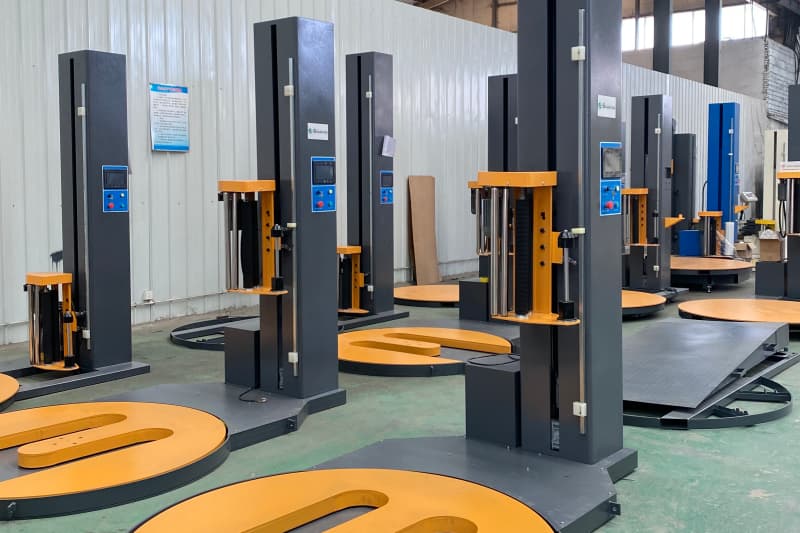
Stretch wrapping machinery comes in various types, but semi-automatic models offer unique advantages. These machines use powered turntables or rotary arms to wrap pallets with stretch film, while an operator manually places the pallet on the machine and starts the wrapping cycle.
A semi-automatic stretch wrap machine wraps pallets with efficiency while requiring some operator input2, making it ideal for businesses where automation isn't fully practical.
Key features of semi-automatic machines:
- Operator control: An operator manually loads pallets onto the turntable or feeds the film.
- Adjustable film tension: You can configure film settings based on product dimensions and weights.
- Compact size: These machines commonly take up less space than fully automatic systems.
- Cost-effective operation: Lower acquisition costs compared to fully automated machinery.
They meet the production needs of manufacturers, warehouses, and logistics companies processing moderate pallet volumes.
Why choose semi-automatic machines over fully automatic systems?
Fully automated stretch wrap machines offer hands-free operation, but they come with higher upfront investments and maintenance demands, which don’t always align with smaller-scale packaging needs. Semi-automatic machines, on the other hand, strike a balance between efficiency, cost, and versatility3.
Building an adaptable solution with semi-automatic equipment provides operational benefits for businesses prioritizing flexibility and moderate budgets, especially when less automation is sufficient.

Comparing their advantages to fully automatic alternatives:
| Factor | Semi-Automatic | Fully Automatic |
|---|---|---|
| Cost | Lower upfront cost | High upfront investment |
| Complexity | Easier setup and operation | Advanced programming and maintenance |
| Operator Requirements | Requires manual loading | Fully hands-free operation |
| Ideal Application | Small-to-medium volume packaging | High-volume, continuous operation |
| Customization Options | Easily tailored to different workflows | Can be restrictive based on configuration |
How do customization options enhance semi-automatic machines?
Many buyers overlook the importance of machine configuration—but this is where semi-automatic equipment shines. Tailored modifications can transform a basic stretch wrap machine into a powerful tool for specific workflows.
Customization allows semi-automatic stretch wrap machines to accommodate varied product dimensions, packaging materials, and space constraints, ensuring seamless integration into production processes.
Examples of customizations:
- Turntable capacity: Adjust turntable size and weight capacity to fit unique pallet dimensions.
- Film carriage features: Add pre-stretch or tension adjustment settings to match film type and product stability needs.
- Programmable controls: Include cycle settings for variable wrap patterns, speeds, and application pressures.
- Lift and conveyor systems: Incorporate ergonomic solutions for loading/unloading that streamline manual tasks.
These enhancements enable you to address specific pain points in packaging operations, regardless of industry or workflow complexity.
Case study: A business switch from fully automatic to semi-automatic stretch wrapping
One of my manufacturing clients struggled with their fully automated stretch wrap machine. While operationally impressive, it often required frequent downtime due to advanced conveyor integration and high maintenance needs. Their packaging volumes did not justify these complications, and staff faced hard-to-resolve technical disruptions.
By switching to a tailored semi-automatic system, the business achieved smooth performance, lower maintenance costs, and better alignment with their mid-range production scale.
Key outcomes included:
- Cost savings: Reduced upfront equipment investment by 40% compared to automated alternatives.
- Improved reliability: Less complex machinery required fewer repairs and minimum technical oversight.
- Efficiency boost: Staff involvement enabled faster adaptations to changing product lines.
This example highlights how the right machine configuration resolves operational mismatches.
What factors should you evaluate when selecting a semi-automatic stretch wrap machine?
Choosing the wrong stretch wrap machine can lead to costly inefficiencies—but careful assessment ensures the correct match for your needs.
Align machine specifications with your product dimensions, packaging workflows, budget constraints, and operational goals to maximize value from semi-automatic stretch wrap units.

Key evaluation criteria:
- Product dimensions: Assess pallet size and weight to confirm load compatibility.
- Film type: Ensure tension settings meet your packaging material’s elasticity and resistance.
- Space requirements: Match machine size to existing production areas or facility layouts.
- Operator proficiency: Determine if your team can efficiently manage semi-automatic functionality.
- Volume demand: Verify that semi-automatic equipment fits your daily wrapping throughput.
Taking customer input into account:
As someone who works closely with buyers, I always include detailed discussions about their product characteristics, packaging methods, and site-specific conditions. When customers actively participate in defining requirements, the resulting machine configurations often exceed expectations.
What are the potential limitations of semi-automatic stretch wrap machines?
While semi-automatic machines deliver adaptability and affordability, they may not suit every application. Businesses requiring high-volume, uninterrupted packaging or multi-layer wrapping often benefit more from fully automatic systems.
Businesses with high-speed packaging demands or strictly standardized operations might find semi-automatic stretch wrap machines insufficient for their needs, so evaluate scale carefully.
This underscores the importance of matching machinery to your actual workflow demands—semi-automatic solutions excel in moderate-volume scenarios but require operator input.
Frequently Asked Questions
Are semi-automatic stretch wrap machines easy to operate?
Yes, these machines are user-friendly and require minimal operator training. Manual loading of pallets and pressing start buttons constitute their basic operation. Advanced controls are optional and highly customizable.
What is the average cost of a semi-automatic stretch wrap machine?
Costs range from $5,000–$12,000 depending on features, capacity, and customization options. They remain significantly more affordable than fully automatic systems, which often exceed $20,000.
Can semi-automatic stretch wrap machines handle varying pallet sizes?
Yes, most models include adjustable turntables and flexible tension settings to accommodate pallets of varying weights and dimensions. Custom upgrades enhance their versatility.
How long does delivery and installation typically take?
Standard delivery times fall within 4–8 weeks. Installation usually takes 1–2 days depending on your facility conditions and customized configurations.
Do semi-automatic machines require frequent maintenance?
Compared to fully automated systems, semi-automatic machines tend to require less complex maintenance. Routine servicing for film settings and mechanical components is typically adequate.
Conclusion
Semi-automatic stretch wrap machines strike an excellent balance between functionality, affordability, and adaptability, making them ideal for mid-range packaging needs. They offer customizable solutions tailored to product dimensions, space constraints, and workflow conditions. Careful evaluation of machine features ensures seamless integration into operations.
If you're exploring stretch wrapping solutions, weigh your unique production goals against the capabilities of semi-automatic models. Reach out to learn how customization can optimize packaging processes tailored to your business needs!
"the effect of stretch wrap pre-stretch on", https://digitalcommons.calpoly.edu/cgi/viewcontent.cgi?referer=&httpsredir=1&article=1903&context=theses. A study on packaging machinery highlights the cost-effectiveness and flexibility of semi-automatic stretch wrap machines, particularly for businesses with moderate production scales. However, adaptability may vary based on specific machine models and configurations. Evidence role: general_support; source type: research. Supports: Semi-automatic stretch wrap machines are adaptable and balance affordability with functionality.. Scope note: Adaptability and affordability depend on the specific machine model and industry application. ↩
"Electric Stretch Film Wrapping Machine,Semi-auto ...", https://reframedarchives.sandbox.library.columbia.edu/listing/electric-stretch-film-wrapping-machinesemi-auto-stretch-film?srsltid=211328078. Educational resources on packaging technology describe semi-automatic stretch wrap machines as efficient for moderate-volume operations, with operator involvement ensuring flexibility in handling diverse pallet sizes. Efficiency metrics may vary based on machine settings and operator skill. Evidence role: general_support; source type: education. Supports: Semi-automatic stretch wrap machines are efficient but require operator input.. Scope note: Efficiency depends on operator proficiency and machine settings. ↩
"Electric Stretch Film Dispenser & Wrapping Machine, Heavy- ...", https://reframedarchives.sandbox.library.columbia.edu/listing/electric-stretch-film-dispenser-wrapping-machine-heavy-duty?srsltid=211328111. Research on packaging solutions highlights that semi-automatic stretch wrap machines offer a practical balance of efficiency, affordability, and adaptability for moderate-scale operations. However, the balance may depend on specific industry needs. Evidence role: general_support; source type: research. Supports: Semi-automatic stretch wrap machines balance efficiency, cost, and versatility.. Scope note: The balance may not apply to high-volume or highly specialized operations. ↩