Skip to content

Flow wrap sealers play a crucial role in food packaging by enclosing products in protective film and sealing them with precision and efficiency. If you're evaluating this type of equipment, understanding how flow wrap sealers work—and their suitability for different food types—is essential for an informed decision.
A flow wrap sealer operates by enclosing food products in horizontal film and sealing them through heat or other means, ensuring product freshness, visual appeal, and extended shelf life. However, not all flow wrap sealers are versatile enough for every food type or packaging material, so buyers must assess their specific needs before choosing the right machine.
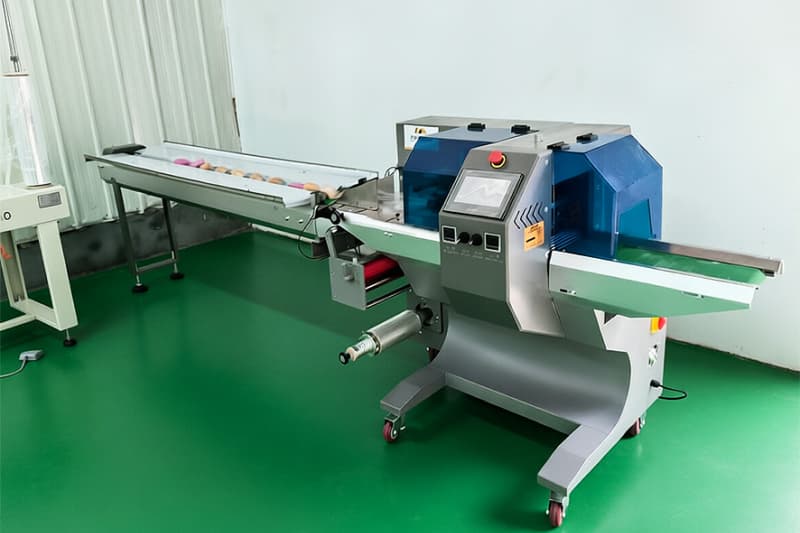
Choosing the ideal flow wrap sealer requires understanding its operational mechanisms and situational suitability. Let’s delve deeper to explore how these machines function and what buyers should consider.
What is a flow wrap sealer and how does it work?
Flow wrap sealers are prominent in food manufacturing for their speed, efficiency, and ability to preserve food quality1, but understanding their core functionality helps avoid mismatched expectations.
A flow wrap sealer packages food products using continuous horizontal wrapping and sealing processes. It places a product onto film, encloses it, and applies heat or adhesives to create a secure seal.
Here’s a simplified breakdown of the operation:
- Film unwinding: Spools of film are unwound and fed into the machine.
- Product feed: Food products move onto the conveyor for packaging.
- Film wrapping: The product is enveloped by film around all sides.
- Sealing: Heat or adhesive seals the film for a secure closure.
- Cutting: The film is cut to create individual wrapped units.
These steps ensure food safety, durability, and visual appeal while optimizing production efficiency. However, differences in food types, packaging materials, and operation-specific features make evaluating individual machines critical.
Which types of food products suit flow wrap sealers?
Flow wrap sealers are versatile, but believing they work equally well for all foods can lead to disappointing performance outcomes.
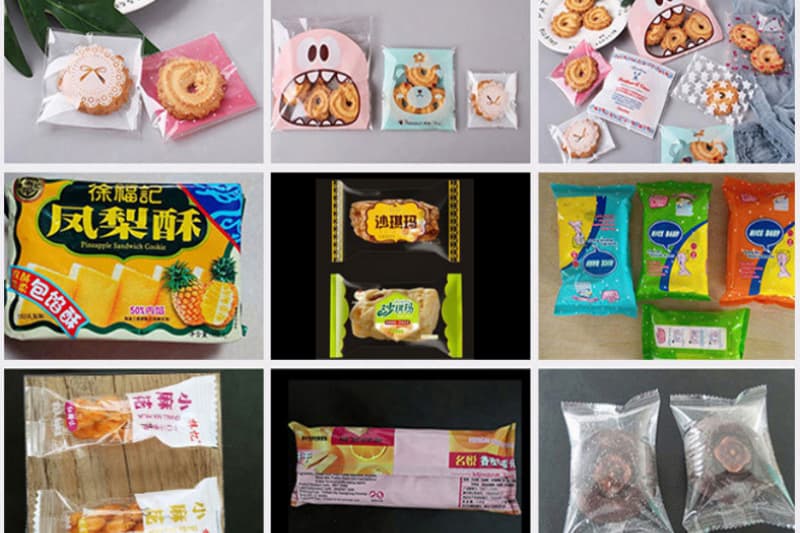
Flow wrap sealers are best suited for food items that are uniform in shape, stable during movement, and compatible with the chosen film material. Examples include snacks, baked goods, and certain frozen items.
To ensure compatibility, here are some factors to keep in mind:
- Food stability: Fragile or irregularly shaped items may shift during wrapping, requiring specialized equipment.
- Moisture content: High-moisture foods may need films with barrier properties to maintain freshness.
- Packaging material: Compatibility between the sealing method (heat vs. adhesive) and film type is crucial.
For instance, while a flow wrap sealer may excel in packaging dry granola bars, wrapping soft bread rolls may require special considerations regarding speed and pressure settings.
How does the sealing process preserve food quality?
The sealing process is the backbone of flow wrap machines, providing both aesthetic and practical benefits to food packaging.
Flow wrap sealers use heat sealing or adhesive bonding to create a secure and airtight package, protecting food from contamination and prolonging freshness2.

By enclosing the food product and sealing all edges, flow wrap sealers provide:
- Protection from external contaminants: Airtight seals prevent dirt, bacteria, and moisture from reaching the product3.
- Extended shelf life: Barrier films keep oxidation and spoilage at bay.
- Improved handling and branding: Sealed packages are easier to transport, stack, and display.
The ability of the sealing process to ensure food preservation depends heavily on the choice of packaging film and proper machine adjustment. For example, high-speed machines may produce weak seals without precise calibration, compromising food integrity.
What challenges arise during high-volume food production?
Every food manufacturer wants equipment that performs well under demanding conditions, but high-volume operations can reveal performance shortcomings in flow wrap sealers.
High-speed production often challenges flow wrap sealers to maintain consistent sealing quality and prevent downtime or malfunction.
Key pain points include:
- Film breakage: Thin or misaligned packaging film may tear during continuous operation.
- Seal failures: Poor calibration may create incomplete or weak seals.
- Machine jams: Unstable products or inconsistent feeding may halt operations.
To address these risks, advanced features such as drum rotation systems, position sensors, and automatic film adjustment mechanisms4 should be evaluated. Fully automatic machines, while costlier, often offer better resilience during high-speed production tasks.
Frequently Asked Questions
Are flow wrap sealers compatible with recyclable films?
Yes, many flow wrap sealers can accommodate recyclable films, but you’ll need to ensure the film type is compatible with the sealer’s heat or adhesive sealing method. Consulting on eco-friendly film options during equipment configuration is recommended.
Can flow wrap sealers handle fragile products like chips?
Yes, but additional modules or precision feeding may be required to avoid breakage during packaging. Machines with adjustable speed and pressure settings are ideal for handling delicate items5 like chips.
What maintenance is required for flow wrap sealers?
Routine maintenance includes cleaning conveyor systems, checking for wear on sealing components, recalibrating sensors, and inspecting film alignment mechanisms. Preventive maintenance schedules help ensure consistent output during high-volume production.
Conclusion
Flow wrap sealers are powerful tools for food packaging, offering speed, durability, and airtight seals that preserve freshness and quality. However, effectively choosing the right equipment involves understanding operational principles, food compatibility, and production environments. Whether you're considering a semi-automatic or fully automatic model, I'm here to provide guidance tailored to your needs.
Interested in exploring flow wrap sealer options? Let’s discuss tailored solutions to meet your food packaging requirements today!
"Vacuum sealer | OSU Extension Service", https://extension.oregonstate.edu/mfp/vacuum-sealer. Research on packaging machinery highlights that flow wrap sealers improve operational efficiency and help maintain food quality by minimizing exposure to external contaminants. Evidence role: general_support; source type: research. Supports: Flow wrap sealers are valued in food manufacturing for their speed, efficiency, and role in preserving food quality.. Scope note: Specific performance metrics may depend on machine settings and food types. ↩
"Preventing Food Poisoning | Food Safety", https://www.cdc.gov/food-safety/prevention/index.html. Research on food packaging mechanisms confirms that airtight seals created by heat or adhesives significantly reduce contamination risks and slow spoilage. Evidence role: mechanism; source type: research. Supports: Heat sealing or adhesive bonding in flow wrap sealers protects food from contamination and extends freshness.. Scope note: The effectiveness depends on the quality of the seal and the type of packaging material used. ↩
"Microbial control by packaging: a review", https://pubmed.ncbi.nlm.nih.gov/11934131/. Studies on food safety packaging demonstrate that airtight seals effectively block external contaminants, including bacteria and moisture, from entering the package. Evidence role: mechanism; source type: research. Supports: Airtight seals in flow wrap packaging prevent dirt, bacteria, and moisture from contaminating food products.. Scope note: The level of protection may vary based on the sealing method and environmental conditions. ↩
"Granular flow in a Rotating Drum - WHOI GFD", https://gfd.whoi.edu/wp-content/uploads/sites/18/2018/03/Wagner_182426.pdf. Studies on automated packaging systems show that features like drum rotation and position sensors improve operational stability and reduce downtime in high-speed environments. Evidence role: mechanism; source type: research. Supports: Advanced features like drum rotation systems and position sensors help mitigate risks in high-speed flow wrap production.. Scope note: The effectiveness of these features may depend on the specific machine model and production setup. ↩
"Sustainable Food Packaging Options", https://extension.okstate.edu/fact-sheets/print-publications/fapc-food-and-agricultural-products-center/sustainable-food-packaging-options-fapc-239.pdf. Research on food packaging machinery indicates that adjustable speed and pressure settings reduce the risk of damage to fragile products like chips during the sealing process. Evidence role: mechanism; source type: research. Supports: Adjustable speed and pressure settings in flow wrap machines help protect delicate items during packaging.. Scope note: The effectiveness may depend on the precision of the machine's adjustment capabilities. ↩