Skip to content

Packaging pallets efficiently is a constant challenge for logistics and warehousing professionals. A semi-automatic pallet wrapper promises to enhance productivity, reduce manual labor, and save costs—but is it the right investment for your operation? Understanding how these machines impact efficiency, compatibility, and material savings is key to making an informed decision.
A semi-automatic pallet wrapper enhances packaging efficiency by automating the wrapping process while still requiring some operator input1. It reduces manual effort, ensures consistent stretch film application, and offers cost savings through pre-stretch technology2, making it ideal for medium-scale warehousing and logistics operations.

If you’re torn between upgrading to semi-automatic equipment versus sticking with manual wrapping, this guide will walk you through what to consider, from operational advantages to cost-effectiveness. Let’s explore the key aspects in detail.
How does a semi-automatic pallet wrapper improve packaging efficiency?
Time and labor are precious resources in warehousing, and manual pallet wrapping can be slow and inconsistent3. With a semi-automatic pallet wrapper, the process becomes automated enough to save time while reducing operator fatigue4.
A semi-automatic pallet wrapper streamlines the wrapping process by spinning the pallet or stretch film roll mechanically, enabling consistent wrapping and reducing cycle times compared to manual wrapping.
When my clients switch from manual to semi-automatic wrappers, they often share how it frees up their employees' time for other tasks. Here’s what makes a difference:
- Time savings: Manual wrapping requires workers to walk around each pallet, often multiple times, to apply film. A semi-automatic wrapper eliminates the need for those repeated trips, enabling quicker packaging.
- Improved consistency: Unlike manual application, the machine ensures uniform tension and coverage, reducing the risk of damage during transportation.
- Reduced strain on workers: Wrapping pallets manually can lead to fatigue and even injuries from repetitive motion. Semi-automatic machines alleviate these ergonomic risks.
The improvements don’t just add up on the production line—they’re noticeable during peak shipping periods when every minute counts.
Is a semi-automatic pallet wrapper compatible with your operations?
One of the top questions I hear from customers is whether the machine will work with their varying pallet sizes, weights, and unique packaging needs. Compatibility is critical for smooth integration into your workflow.
To ensure compatibility, evaluate the machine’s turntable size, weight capacity, adjustable settings, and adaptability5 to your specific operational environment. Most models accommodate standard pallets, but unique requirements may call for custom configurations.
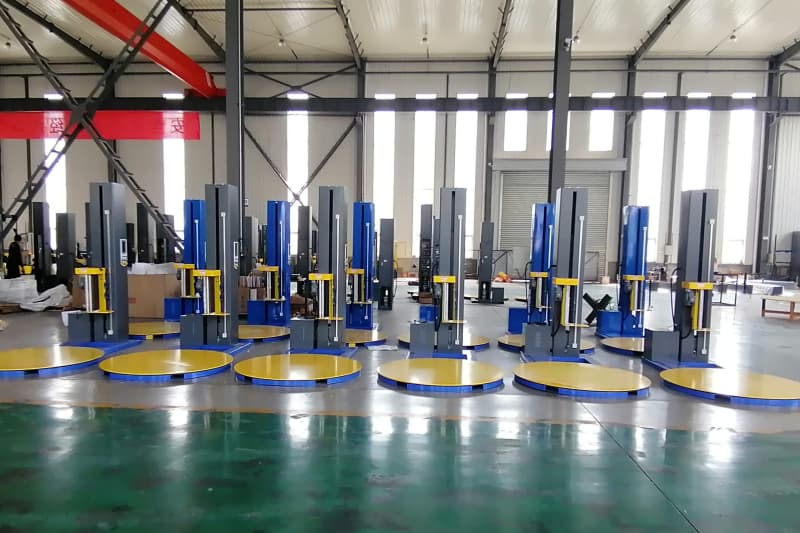
Here’s what to assess when evaluating compatibility:
- Turntable dimensions: Most semi-automatic pallet wrappers come with standard turntables to fit common pallet sizes (e.g., 48” x 40”). If you handle oversized or irregular loads, check whether the machine offers extensions.
- Weight capacity: Confirm the wrapper’s maximum load capacity. High-capacity models can handle heavier pallets, which is especially crucial for industrial warehouses.
- Customizable settings: Look for adjustable wrap tension, height sensors, and wrapping patterns to suit your products. For example, fragile goods may need gentler film tension to avoid damage.
- Space considerations: These machines typically require around 10–15 square meters of operational space. Ensure your facility has the layout to accommodate the wrapper without disrupting workflows.
Carefully matching the machine’s capabilities to your operation avoids downtime and ensures seamless use from day one.
How does pre-stretch technology save on stretch film costs?
Stretch film costs can quickly add up, especially for warehouses managing high throughput. Pre-stretch technology, a standard feature in most semi-automatic pallet wrappers, addresses this issue by maximizing film efficiency.
Pre-stretch technology elongates the film before applying it to a pallet6, reducing the amount of film needed while maintaining secure coverage. This can result in material cost savings of 30–50% over manual wrapping7.
Here’s how this translates into real-world benefits:
- Less film consumption: Pre-stretched film can cover more surface area while maintaining sufficient strength. For example, instead of using 40 meters of stretch film per pallet manually, you might use only 25–30 meters with a pre-stretch wrapper.
- Tighter wraps: Pre-stretch holds products more securely by applying even tension, reducing the risk of shifting or damage during transit.
- Reduced waste: Film breakage is minimized when it’s pre-stretched correctly, leading to fewer discarded rolls and lower waste disposal costs.
One of my clients shared how introducing a semi-automatic wrapper allowed them to cut their monthly film usage by nearly 40%, significantly lowering packaging expenses.
How reliable are semi-automatic pallet wrappers over time?
Durability and low maintenance requirements are vital for ensuring a strong return on investment (ROI) in any capital equipment purchase. Semi-automatic pallet wrappers offer impressive reliability, provided they’re used and maintained correctly.
The reliability of a semi-automatic pallet wrapper depends on its build quality, proper maintenance, and ease of operating procedures. Look for durable components, straightforward maintenance routines, and robust warranty provisions when evaluating machines.

When evaluating the reliability of a machine, focus on:
- Build quality: Look for high-grade materials like steel frames and durable motors to ensure the machine withstands daily wear and tear.
- Maintenance schedules: Most manufacturers provide clear maintenance guidelines, such as lubrication schedules and part replacements. Following these ensures long-term performance.
- Ease of training: Machines with intuitive controls minimize the learning curve for operators and reduce the risk of errors.
- Warranty coverage: A robust warranty often reflects the manufacturer’s confidence in their product. For example, many machines offer 12–24 months of coverage, potentially including technical support.
Adding these factors to your due diligence checklist minimizes breakdown risks and maximizes your machine’s operational lifespan.
How do semi-automatic pallet wrappers enhance workforce productivity?
Automating repetitive tasks like pallet wrapping doesn’t just free up your team’s time; it also allows you to reallocate employees to other value-adding activities within the warehouse.
By automating the wrapping process, semi-automatic pallet wrappers reduce manual effort and free up staff to focus on other operational priorities8, increasing overall productivity.
Additionally, these machines improve employee well-being. I’ve seen how reducing repetitive twisting motions for manual wrapping translates to fewer complaints of physical strain9 and a decrease in workplace injuries. Over time, this not only improves morale but also reduces absenteeism and helps retain skilled workers10.
Frequently Asked Questions
How does a semi-automatic pallet wrapper differ from a fully automatic one?
A semi-automatic pallet wrapper requires some level of manual intervention, such as attaching and cutting the stretch film, whereas a fully automatic wrapper handles the entire process autonomously. Semi-automatic models are more cost-effective and better suited for moderate workloads.
Can a semi-automatic pallet wrapper handle irregularly shaped pallets?
Yes, many semi-automatic pallet wrappers come with adjustable controls that accommodate irregularly shaped or uneven loads. It’s important to check the machine’s specifications to ensure compatibility with your unique pallet dimensions.
How much can I save using pre-stretch technology in a semi-automatic pallet wrapper?
Pre-stretch technology can reduce stretch film usage by up to 50%. For operations wrapping hundreds or thousands of pallets monthly, this can lead to significant material cost savings.
Do semi-automatic pallet wrappers require a lot of maintenance?
No, most semi-automatic pallet wrappers are designed for low-maintenance operation. Regular tasks may include cleaning, lubrication, and occasional part replacements, but following the manufacturer’s maintenance schedule can ensure reliability.
Can I operate a semi-automatic pallet wrapper without extensive training?
Yes, semi-automatic pallet wrappers are designed for ease of use with intuitive controls. Most operators need minimal training—often no more than an hour or two—to start using the machine effectively.
Conclusion
A semi-automatic pallet wrapper is an excellent choice for logistics and warehousing operations looking to enhance packaging efficiency without committing to fully automated systems. By ensuring compatibility, leveraging pre-stretch technology to reduce costs, and maintaining machine reliability, you can achieve better performance and cost-effectiveness in your packaging processes.
If you’re ready to explore semi-automatic pallet wrappers tailored to your operation, reach out to discuss your specific needs—I’d love to help you find the perfect fit!
"the effect of stretch wrap pre-stretch on", https://digitalcommons.calpoly.edu/cgi/viewcontent.cgi?referer=&httpsredir=1&article=1903&context=theses. Studies on semi-automatic pallet wrappers indicate that these machines reduce manual effort and improve packaging consistency, leading to enhanced operational efficiency. However, the degree of improvement may vary depending on the specific model and operational context. Evidence role: general_support; source type: research. Supports: Semi-automatic pallet wrappers enhance packaging efficiency by automating the wrapping process while requiring minimal operator input.. Scope note: Efficiency gains may depend on the scale and type of operation. ↩
"the effect of stretch wrap pre-stretch on", https://digitalcommons.calpoly.edu/cgi/viewcontent.cgi?referer=&httpsredir=1&article=1903&context=theses. Educational resources highlight that pre-stretch technology in pallet wrappers can reduce film usage by up to 50%, while ensuring consistent application. However, savings may vary based on film quality and machine settings. Evidence role: general_support; source type: education. Supports: Semi-automatic pallet wrappers reduce manual effort, ensure consistent stretch film application, and offer cost savings through pre-stretch technology.. Scope note: Savings and consistency depend on operational practices and film type. ↩
"the effect of stretch wrap pre-stretch on", https://digitalcommons.calpoly.edu/cgi/viewcontent.cgi?referer=&httpsredir=1&article=1903&context=theses. Research comparing manual and semi-automatic pallet wrapping shows that manual methods often result in inconsistent film application and longer cycle times. However, the extent of inefficiency may depend on worker skill and pallet complexity. Evidence role: general_support; source type: research. Supports: Manual pallet wrapping can be slow and inconsistent compared to semi-automatic methods.. Scope note: Performance varies based on operator experience and pallet type. ↩
"musculoskeletal risks in washington state apple packing ...", https://deohs.washington.edu/sites/default/files/images/general/applepacking.pdf. Ergonomic studies suggest that semi-automatic pallet wrappers reduce physical strain associated with manual wrapping, particularly repetitive bending and twisting motions. However, fatigue reduction may depend on machine design and operator usage patterns. Evidence role: general_support; source type: research. Supports: Semi-automatic pallet wrappers reduce operator fatigue by minimizing repetitive physical motions.. Scope note: Impact varies based on machine ergonomics and operator habits. ↩
"LIBERTY INDUSTRIES SERIES 500 STRETCH WRAPPER ...", https://old.lytlesrebc.edu/textbook/dzX00U9AD309/Liberty-Industries-Series_500-Stretch-Wrapper-Manual. Educational materials emphasize the importance of assessing turntable dimensions, load capacity, and adjustable settings to match pallet wrapper capabilities with specific operational requirements. However, compatibility may vary across models. Evidence role: general_support; source type: education. Supports: Evaluating turntable size, weight capacity, adjustable settings, and adaptability is essential for ensuring compatibility with operational needs.. Scope note: Guidelines may differ based on machine specifications. ↩
"the effect of stretch wrap pre-stretch on", https://digitalcommons.calpoly.edu/cgi/viewcontent.cgi?referer=&httpsredir=1&article=1903&context=theses. Technical studies explain that pre-stretch technology increases film efficiency by elongating it to its maximum tensile strength before application, reducing material consumption. However, effectiveness may depend on film quality and machine calibration. Evidence role: mechanism; source type: research. Supports: Pre-stretch technology elongates stretch film before application, reducing material usage while maintaining secure coverage.. Scope note: Savings depend on film type and machine settings. ↩
"the effect of stretch wrap pre-stretch on", https://digitalcommons.calpoly.edu/cgi/viewcontent.cgi?referer=&httpsredir=1&article=1903&context=theses. Research indicates that pre-stretch technology can lower stretch film usage by up to 50%, translating into significant cost savings. However, actual savings may vary based on operational scale and film type. Evidence role: statistic; source type: research. Supports: Pre-stretch technology can reduce material costs by 30–50% compared to manual wrapping.. Scope note: Savings percentages may differ across industries and usage scenarios. ↩
"Investigation of Fundamental Relationships to Improve the ...", https://vtechworks.lib.vt.edu/bitstream/handle/10919/73556/Park_J_D_2015.pdf?sequence=. Studies on warehouse automation show that semi-automatic pallet wrappers reduce manual labor requirements, enabling staff to focus on higher-value tasks. However, productivity gains may depend on operational scale and workflow design. Evidence role: general_support; source type: research. Supports: Semi-automatic pallet wrappers reduce manual effort and allow staff to focus on other operational priorities.. Scope note: Productivity improvements depend on task reallocation strategies. ↩
"A conceptual framework of cost/benefit justification for ...", https://digitalcommons.njit.edu/cgi/viewcontent.cgi?article=1520&context=dissertations. Ergonomic research suggests that automating repetitive tasks like pallet wrapping reduces physical strain and lowers the risk of musculoskeletal disorders. However, the extent of improvement may depend on individual worker conditions and machine design. Evidence role: expert_consensus; source type: research. Supports: Reducing repetitive twisting motions for manual wrapping decreases physical strain complaints among workers.. Scope note: Impact varies based on individual health and ergonomic setup. ↩
"Who Is Responsible for Workplace Injuries in the New and ...", https://unu.edu/article/who-responsible-workplace-injuries-new-and-dynamic-frontier-ai. Workplace studies indicate that ergonomic improvements, such as reducing physical strain, positively impact employee morale and retention while lowering absenteeism rates. However, results may vary based on organizational culture and worker demographics. Evidence role: general_support; source type: research. Supports: Reducing physical strain improves worker morale, reduces absenteeism, and aids in retaining skilled employees.. Scope note: Effects depend on broader workplace conditions and policies. ↩