Skip to content

Strapping machines are essential tools for securing packages, pallets, and cartons in manufacturing and logistics. But not all strapping machines are created equal — each design serves specific applications and material types. Misunderstanding these distinctions can lead to costly inefficiencies. Here's how strapping machines work and what to consider when selecting one.
Strapping machines apply tension to straps, sealing them securely around items for packaging and shipment. Types vary widely, from manual to fully automated systems, based on scale, speed, material compatibility, and operational needs.

Choosing the right machine requires understanding how different designs function and how they fit specific applications. Let’s unravel what makes each type unique.
What are the main types of strapping machines?
Many buyers assume all strapping machines work the same, resulting in mismatched equipment choices. In reality, machines differ significantly in design and intended use.
Commonly used types include tabletop strapping machines for cartons, pallet strappers for bulky loads, and specialized paper banding machines for delicate items. Each functions uniquely depending on whether they use PP straps, PET straps, or even PE ropes.

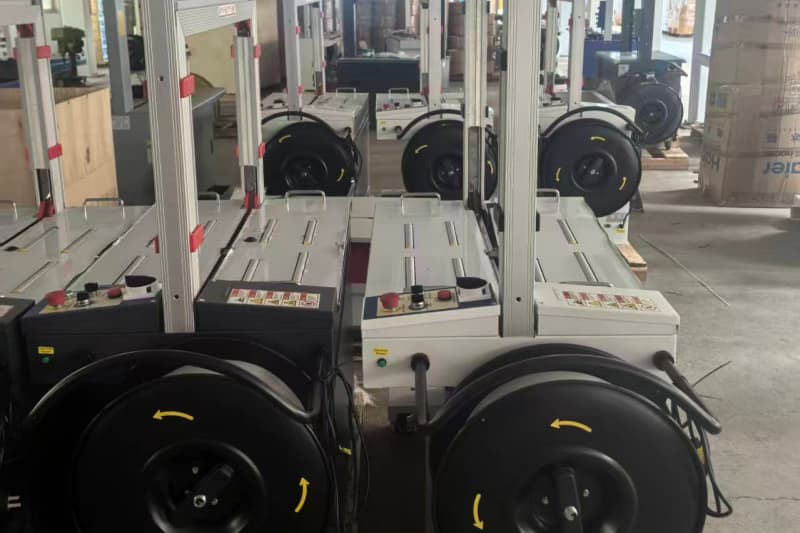
Tabletop Strapping Machines
Designed for handling cartons or smaller packages, these machines are ideal for e-commerce or low-volume manufacturing. They typically use polypropylene (PP) straps.
- Automation Level: Commonly available as semi-automatic and fully automatic models.
- Use Case Example: A customer in the food packaging sector upgraded to a fully automatic tabletop strapper to streamline operations, reducing manual labor by 70% while meeting high sanitation standards.
Pallet Strapping Machines
Pallet strappers use tensioning mechanisms to bind large items, often in industries like industrial manufacturing or warehousing.
- Material Compatibility: Frequently use PET straps due to their strength.
- Real Issue Solved: A logistics company initially misused carton strapping equipment on bulky pallets, causing constant strap breakage. Switching to a PET-compatible pallet machine resolved the issue with improved durability and tension control.
Paper Banding Machines
These machines are more specialized, designed for gentle binding without damage — often for books, printed materials, or fragile items requiring low tension.
- Misconception Addressed: Customers sometimes overlook the benefits of paper banding machines, opting for standard strappers that risk damaging delicate goods.
How do strapping materials impact machine choice?
Picking the wrong machine often starts with material incompatibility. Strapping materials aren’t interchangeable; they’re designed based on load strength, flexibility, and surface characteristics.
For example, PP straps are cost-effective and lightweight, but unsuited for heavy loads. PET straps are reliable for industrial applications, while PE ropes offer flexibility for irregular shapes.

Why Material Compatibility Matters
- Strength vs. Weight: Overloading PP straps on heavy pallets leads to breakage, while using PET straps for cartons may be overkill.
- Surface Sensitivity: Printed or finished goods often require paper bands rather than traditional plastic straps.
- Environmental Factors: Some industries prefer recyclable strap materials, further limiting compatibility.
In one case, a packaging distributor avoided material mismatch by consulting on-site testing before purchasing. Their new setup — matching PET straps with an automated pallet strapper — improved customer satisfaction across their client base.
Manual, semi-automatic, or fully automatic — which works best?
Strapping machines come in three automation levels to accommodate different workloads and budgets. Understanding these options helps align machine functionality with operational needs.
Manual machines offer simplicity for small-scale use, while fully automatic systems excel in high-output environments. Semi-automatic models are the middle ground for moderate workloads.

Feature Breakdown by Automation Level
| Level | Pros | Cons | Best For |
|---|---|---|---|
| Manual | Low cost, simple operation | Labor-intensive, slow throughput | Small businesses, occasional use |
| Semi-Automatic | Reasonable speed, cost-effective | Requires operator intervention | Moderate workloads, growing businesses |
| Fully Automatic | High-speed, fully hands-free | Higher initial cost | Large-scale operations |
Real-World Example
A manufacturer struggling with slow manual strapping upgraded to semi-automatic machines for batch operations. The investment paid off with efficiency gains of up to 50%.
Common mistakes buyers make and how to avoid them?
Strapping machine purchases can go wrong due to operational oversights, overestimating automation needs, or mismatched material compatibility.
Mistakes include underutilizing high-end automated machines or using PP straps for pallets, resulting in strap failure and wasted time. Evaluate workload size, packaging type, and material needs thoroughly before buying.
Lessons Learned
- Overautomation: One e-commerce firm invested in a fully automatic system but realized later their low output didn’t justify the cost. Downsizing to semi-automatic machines aligned better with their operations.
- Ignoring Material Needs: A regional distributor mismatched PE ropes with a machine designed for rigid straps, causing jamming issues. A quick material swap fixed the problem.
Taking time for proper needs assessment can prevent these slips, enhancing long-term return on investment.
Frequently Asked Questions
How do I choose the right strapping machine material?
Evaluate the load weight, item fragility, and environmental factors. PP straps suit lighter goods; PET straps handle heavier loads. Paper bands are ideal for sensitive materials.
Can I use one machine for multiple strap types?
Some advanced models accommodate multiple strap types, but compatibility varies. Always verify with the supplier whether the machine supports your specific materials.
Is an automatic strapping machine worth the cost?
For high-volume operations, yes. Automatic machines save labor and improve efficiency. Lower-output settings may benefit more from semi-automatic models.
Conclusion
Strapping machines are highly versatile but require careful consideration to ensure compatibility, efficiency, and cost-effectiveness. By understanding the functional differences across types, materials, and automation levels, buyers can avoid common pitfalls and maximize their investment. Whether you're securing cartons or heavy pallets, selecting the right strapping machine depends on application-specific factors.
- Need help choosing the right strapping machine? Contact me for recommendations tailored to your needs and operational scale. Let’s find the perfect solution together!