Skip to content

Stretch wrapping machines are critical tools in modern packaging operations, designed primarily to secure goods during transit and storage. By applying stretch film around pallets or individual items, these machines enhance product stability, reduce transportation damage1, and optimize storage space2. Their role extends beyond simple wrapping to streamline supply chain workflows and meet specific logistical demands.
A stretch wrapping machine’s purpose is to stabilize items for transport and storage, reduce product damage, and improve packaging efficiency across industries like manufacturing, logistics, and e-commerce. These machines are available in various configurations to accommodate different product shapes, sizes, and operational requirements.
Understanding the full scope of their benefits requires a closer look at how stretch wrapping machines contribute to packaging operations and what considerations go into choosing the right solution.
How do stretch wrapping machines improve product stability?
Securing products during transit is one of the most essential functions of stretch wrapping machines.
Stretch wrapping machines improve product stability by tightly securing items with stretch film to prevent shifting or collapse3 during transportation and handling. This ensures that goods arrive at their destination in optimal condition, reducing costly damage and delays.
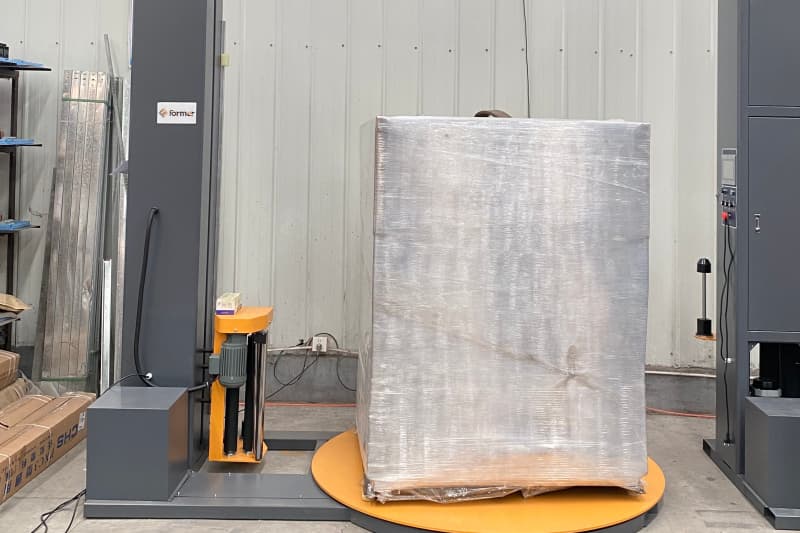
Stretch wrapping creates a reinforced layer around the items being packaged, minimizing movement even under rough transit conditions. Industries such as food and beverage, industrial manufacturing, and logistics rely on this function to protect sensitive or fragile goods. Additionally, stretch film helps weatherproof pallets, shielding them from environmental elements like rain and dust4.
Key benefits of improved stability include:
- Protection during transit: Ensures packages remain intact despite transport vibrations.
- Minimized warehouse damage: Prevents goods from toppling during storage or handling.
- Safe stacking: Allows for more stable pallet stacking, optimizing storage capacity.
What types of stretch wrapping machines are available?
A common misconception is that all stretch wrapping machines function the same; however, there are diverse models designed for distinct applications. Choosing the right type depends on product characteristics, packaging goals, and operational workflows.
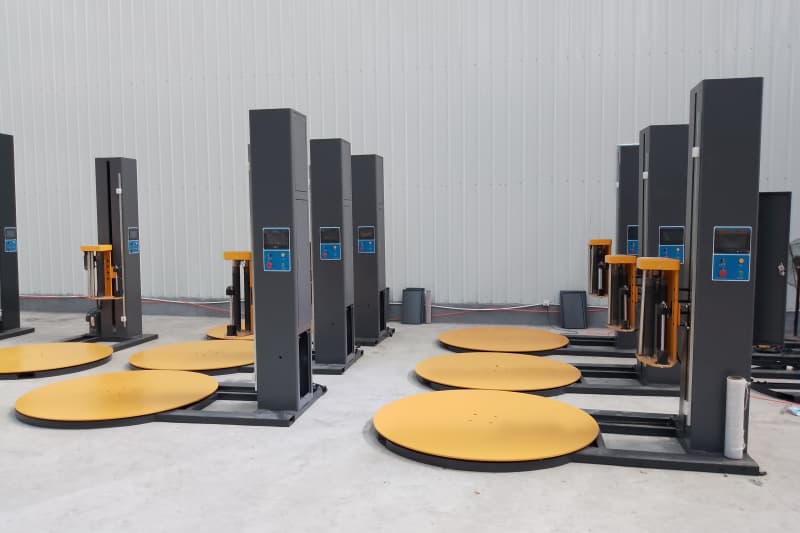
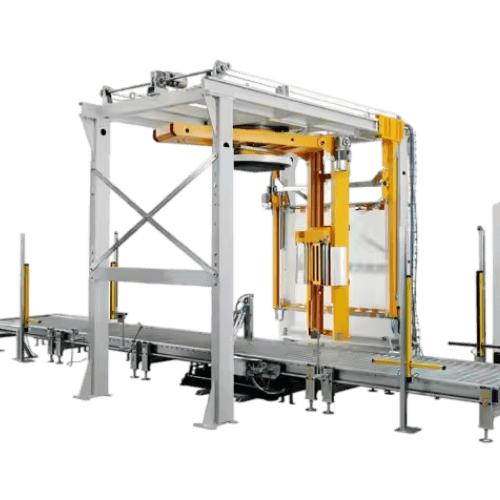
Stretch wrapping machines come in three primary types: turntable wrappers, rotary arm wrappers, and orbital (horizontal) wrappers, each suited to specific packaging needs.
A closer look at machine types:
| Machine Type | Best Suited For | Key Features |
|---|---|---|
| Turntable Wrappers | Standard pallets with uniform shapes | Rotating table moves pallet while wrapping |
| Rotary Arm Wrappers | Heavy or fragile load items | Stationary load with a rotating wrapping arm |
| Orbital Wrappers | Long, narrow objects like pipes or lumber | Horizontal wrapping for elongated items |
These designs are carefully tailored to adapt to various operational challenges. For example, in a recent case, I recommended an orbital wrapper to an Italian pipe manufacturer struggling with overseas shipping damage. The horizontal mechanism efficiently secured their long, cylindrical products, mitigating risks associated with complex transit scenarios.
Should you choose a fully automated or semi-automated stretch wrapper?
Deciding between fully automated and semi-automated solutions is often a critical consideration for manufacturers and logistics managers evaluating investments in stretch wrapping.
Fully automated stretch wrappers minimize labor requirements and are ideal for large-scale operations. Semi-automated machines balance cost-efficiency and control for smaller production environments.

Key decision-making factors:
- Production Volume: High-speed, automated machines may suit large warehousing or manufacturing facilities, while semi-automated options are often better for smaller-scale operations.
- Labor Costs: Fully automated wrapping reduces dependency on manual labor, cutting long-term operational expenses.
- Budget Constraints: While automation increases upfront costs, it also improves efficiency over time, making it an investment consideration.
- Workflow Fit: Semi-automated machines may integrate better into specific workflows requiring manual oversight.
Regardless of automation level, advanced machines often offer features such as adjustable film tension, safety sensors, and multi-program settings5 to optimize packaging.
How do stretch wrapping machines enhance storage and logistics efficiency?
Beyond transit and damage prevention, stretch wrapping machines play a vital role in improving overall storage and logistical operations.
Stretch wrapping machines enhance storage efficiency by stabilizing pallets for safe stacking, optimizing warehouse space6, and protecting packaging from environmental factors like moisture and dirt. This helps businesses streamline downstream logistics.
Real-world advantages:
- Compact storage: Well-secured pallets can be stacked higher and stored more compactly, saving warehouse space.
- Weatherproofing: Stretch film adds a protective barrier around goods, reducing vulnerability to external elements during storage.
- Streamlined handling: Stabilized pallets ease forklift movement and transportation during distribution.
Industries such as e-commerce and third-party logistics experience significant benefits7 from these enhancements, especially in fast-paced environments requiring efficient inventory management.
Frequently Asked Questions
Are stretch wrapping machines only for large manufacturing facilities?
No, stretch wrapping machines are versatile and can be used by small businesses, warehouses, and e-commerce companies. They improve packaging efficiency and product protection, regardless of operation size.
Can stretch wrapping machines be customized for non-standard items?
Yes, orbital or horizontal stretch wrapping machines are often customized to wrap elongated or irregularly shaped items such as pipes, lumber, or profiles.
How much automation do I need in a stretch wrapping machine?
Choose fully automated machines for high-volume operations seeking maximum efficiency; semi-automated options work well for smaller or medium-scale facilities with tighter budgets or manual workflow needs.
What is the difference between stretch wrapping and shrink wrapping?
Stretch wrapping uses elastic film to secure items tightly, while shrink wrapping applies heat to shrink film around goods8. Stretch wrapping is primarily used for palletizing and load stabilization, while shrink wrapping is more common for retail packaging.
How does pre-stretched film impact machine performance?
Pre-stretched film reduces resistance during wrapping, improving application speed and film usage efficiency9 while maintaining load stability.
Conclusion
The purpose of a stretch wrapping machine goes far beyond simply securing goods with film. These machines are vital tools for improving product stability, minimizing shipping damage, and optimizing warehouse storage. Choosing the right stretch wrapper depends on product characteristics, operational workflows, and budget considerations. Whether you need to stabilize pallets for transit or protect elongated items like pipes, the versatility of stretch wrapping machines makes them indispensable in modern packaging operations.
If you’re evaluating stretch wrapping solutions for your business, I can help you identify the best machine to meet your specific needs. Contact me today to discuss tailored recommendations for your packaging challenges.
"Pilot Study of Stretch Film for Securing Palletized Loads - PMC", https://pmc.ncbi.nlm.nih.gov/articles/PMC12656129/. Studies on load containment indicate that properly applied stretch wrapping significantly reduces product damage during transit, though specific reduction percentages vary by product type and transport conditions. Evidence role: statistic; source type: research. Supports: Research demonstrating that proper stretch wrapping reduces product damage during transportation. Scope note: Damage reduction rates depend on film application technique, product fragility, and transport conditions ↩
"Evaluation of stretch film behavior during long-term storage ...", https://repository.rit.edu/cgi/viewcontent.cgi?article=1205&context=japr. Warehouse management studies show that stretch-wrapped pallets can be stacked more safely at greater heights, improving vertical storage utilization, though actual space gains depend on ceiling height and product characteristics. Evidence role: mechanism; source type: research. Supports: Research explaining how stretch wrapping enables higher stacking and improved storage density. Scope note: Storage optimization varies based on warehouse configuration and product weight distribution ↩
"Pilot Study of Stretch Film for Securing Palletized Loads - PMC", https://pmc.ncbi.nlm.nih.gov/articles/PMC12656129/. Packaging engineering research demonstrates that stretch film creates containment force that restricts load movement, with effectiveness dependent on film tension, wrap pattern, and the number of film layers applied. Evidence role: mechanism; source type: research. Supports: Technical research on how stretch film containment force stabilizes palletized loads. Scope note: Load stabilization effectiveness varies with film pre-stretch percentage and application technique ↩
"Biodegradable food packaging films: Material source, ...", https://pubmed.ncbi.nlm.nih.gov/40356182/. Material science studies indicate that polyethylene stretch films provide moderate protection against dust and light moisture exposure, though they are not completely waterproof and protection level depends on film thickness and number of wrapping layers. Evidence role: mechanism; source type: research. Supports: Research on the barrier properties of stretch film against environmental contaminants. Scope note: Stretch film offers limited protection against prolonged water exposure or extreme weather conditions ↩
"Wrapper function", https://en.wikipedia.org/wiki/Wrapper_function. Packaging equipment technical guides describe adjustable film tension control, integrated safety sensors, and programmable wrap patterns as common features in contemporary stretch wrapping machines, designed to optimize film usage and operator safety. Evidence role: general_support; source type: education. Supports: Technical documentation describing standard features in modern stretch wrapping equipment. ↩
"Pilot Study of Stretch Film for Securing Palletized Loads - PMC", https://pmc.ncbi.nlm.nih.gov/articles/PMC12656129/. Warehouse safety standards recognize that proper load containment through stretch wrapping contributes to safer stacking by reducing the risk of load collapse, though maximum stacking heights must still comply with weight distribution and stability requirements. Evidence role: general_support; source type: institution. Supports: Warehouse safety guidelines addressing how load containment affects safe stacking practices. Scope note: Safe stacking heights depend on multiple factors beyond wrapping, including pallet condition and product weight ↩
"Pilot Study of Stretch Film for Securing Palletized Loads - PMC", https://pmc.ncbi.nlm.nih.gov/articles/PMC12656129/. Logistics industry research highlights that e-commerce fulfillment and third-party logistics operations utilize stretch wrapping to manage high-volume shipments and diverse product mixes, though specific benefit realization depends on operational scale and automation level. Evidence role: general_support; source type: research. Supports: Industry analysis documenting stretch wrapping benefits in e-commerce and third-party logistics operations. Scope note: Benefit magnitude varies based on order volume, product diversity, and existing infrastructure ↩
"Stretch wrap", https://en.wikipedia.org/wiki/Stretch_wrap. Packaging technology references define stretch wrapping as a cold process using elastic film tension for load containment, distinct from shrink wrapping which uses heat-activated film shrinkage, with each method suited to different packaging applications. Evidence role: definition; source type: encyclopedia. Supports: Technical definitions distinguishing stretch wrapping from shrink wrapping processes. ↩
"Pilot Study of Stretch Film for Securing Palletized Loads - PMC", https://pmc.ncbi.nlm.nih.gov/articles/PMC12656129/. Packaging material studies indicate that pre-stretched film requires less force during application and can reduce total film consumption per load, though actual efficiency gains depend on the pre-stretch ratio and film gauge used. Evidence role: mechanism; source type: research. Supports: Research explaining how pre-stretched film affects application efficiency and material usage. Scope note: Efficiency improvements vary based on equipment compatibility and specific film characteristics ↩