Skip to content

A case erector is a cornerstone of modern packaging automation, streamlining the assembly of cartons to meet production demands efficiently. However, many buyers struggle with selecting a machine tailored to their specific needs, often prioritizing price over compatibility. Understanding how case erectors work—and what decisions go into selecting one—can transform your operational efficiency.
A case erector works by automatically forming flat, pre-cut cardboard blanks into boxes or cartons, securing them with adhesive or tape, and presenting them ready for filling. These machines improve packaging workflows by reducing manual labor, increasing speed, and ensuring consistent case quality.

Selecting the right case erector isn’t just about understanding its basic functionality. Buyers need to evaluate how the machine integrates with existing production lines, its technical specifications, and post-purchase requirements. Below, I’ll break down answers to common questions and provide actionable insights for procurement.
What functional steps does a case erector follow?
A case erector operates in structured phases to automate box formation.
The case erector process begins by feeding cardboard blanks into the machine, where they are folded, secured, and prepared for further packaging operations. This eliminates manual case assembly and streamlines production workflows with consistent results.
Here’s how it works in detail:
- Blank Feeding: Flat cardboard blanks are loaded into the erector’s hopper.
- Box Formation: The machine folds the blanks into predefined box shapes.
- Sealing Options: Glue, adhesive, or tape secures the box’s bottom flaps.
- Output: Formed cases are discharged for filling, stacking, or further use.
Advanced case erectors may offer features like high-speed folding mechanisms or customizable box configurations. For example, I’ve seen lines where a machine capable of handling multiple box sizes eliminated downtime caused by manual adjustments.
How do case erectors vary in functionality?
Despite their basic purpose, case erectors differ significantly in performance, setup, and capabilities.
Some case erectors specialize in high-speed operations, while others emphasize versatility, accommodating various carton sizes and sealing types. Buyers should assess how each machine aligns with their workflow efficiency goals.
Key differentiators include:
- Production Speed: Ranges from entry-level machines for low-volume operations (10–15 cases per minute) to high-speed options exceeding 30 cases per minute1.
- Box Size Flexibility: Machines may support a fixed range of case dimensions or adjustable layouts for diverse packaging.
- Sealing Methods: Tape sealers, hot-melt glue applicators, or hybrid options drive operational decisions based on product type and sealing preference.
For real-world context, I recall a manufacturer purchasing a cost-effective machine only to discover it couldn’t integrate with their multi-size carton production needs. That oversight created bottlenecks, pushing them to invest in retrofitting—a process that delayed operations and negated initial savings.
Why do installation and integration matter in case erector selection?
Even a perfectly matched case erector fails if overlooked installation and calibration disrupt production flows.
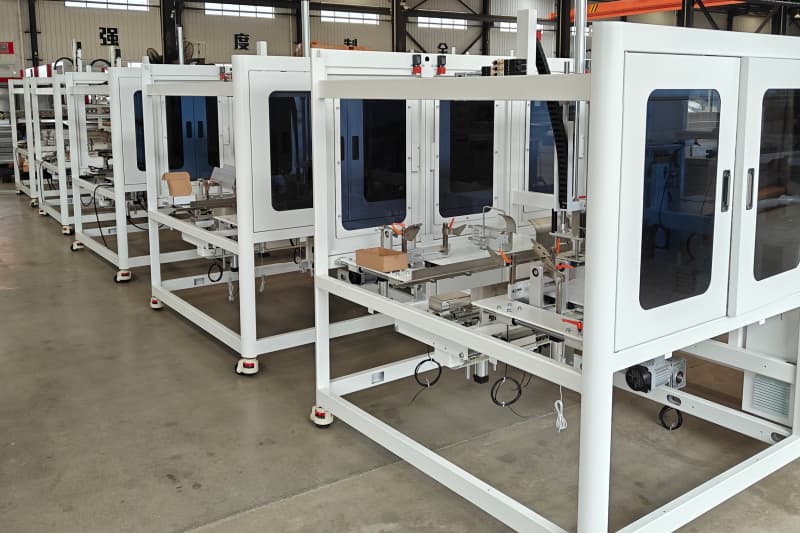
Installing a case erector involves proper calibration, operator training, and ensuring seamless workflow integration2. Without these steps, machine performance may fall short and create costly delays.
Successful integration depends on:
- Technical Compatibility: Check conveyors, fillers, and upstream/downstream packaging machines for alignment.
- On-Site Calibration: Machines often require adjustment based on floor layout or specific production patterns.
- Logistics Planning: Evaluate the placement, power, and material feeds to optimize the machine’s operation.
During one installation I supervised, the customer underestimated how the erector’s footprint would restrict workflow space. We revised their layout mid-project, ultimately improving packaging efficiency. It was a costly but crucial lesson in pre-installation logistics.
What are the efficiency gains of using case erectors?
Automation aside, case erectors unlock broader benefits for businesses stretched by manual processes.
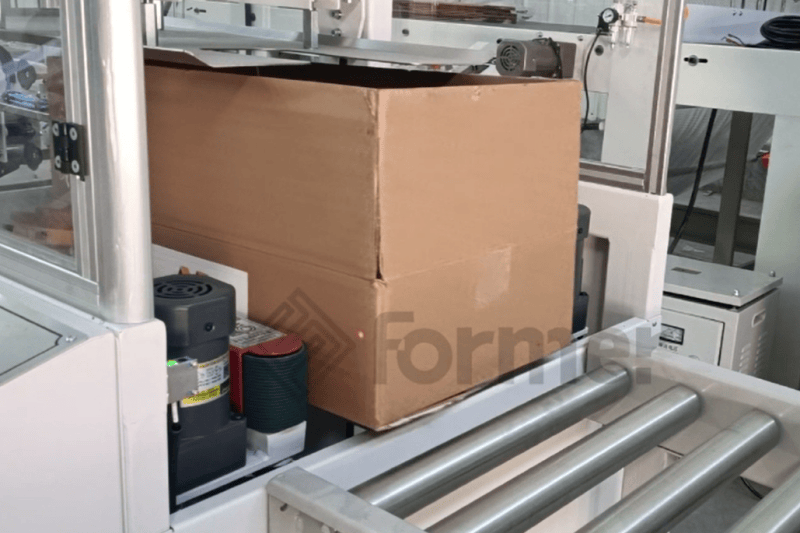
Case erectors improve production efficiency by reducing carton assembly time, minimizing labor costs, and ensuring uniform folding and sealing results—a critical factor for consistency across supply chains.
Here’s why efficiency gains often justify the investment:
- Consistency: Uniform cases reduce mishandling and improve stacking during transport3.
- Labor Savings: One trained operator can oversee multiple machines4 compared to teams manually assembling cartons.
- Speed: Automated case forming accelerates workflows, enabling businesses to scale production as demand grows.
For instance, one e-commerce business I consulted replaced manual assembly with case erectors. This change doubled their packaging throughput within weeks, freeing up staff for other tasks and enabling fulfillment during peak shipping seasons.
How should buyers approach case erector selection?
Choosing the right case erector boils down to balancing technical specifications, future scalability, and operational priorities.
Buyers should consider production speed, box size requirements, integration capabilities, and supplier support during their evaluation process. Reliability and post-purchase services like warranties or technical assistance should also influence decisions.
To evaluate options effectively, focus on the following:
| Criterion | Key Consideration |
|---|---|
| Production Volume | Matches case demand without bottlenecks. |
| Box Dimensions | Handles range of carton sizes efficiently. |
| Sealing Type Options | Supports adhesive or tape needs. |
| Customization | Aligns machine features to product needs. |
| Warranty & Support | Offers remote or on-site technician guidance. |
For example, one customer chose a mid-range model that aligned perfectly with their seasonal production peaks and scalability goals. They avoided overspending on unnecessary speed or features, demonstrating the value of upfront planning.
Frequently Asked Questions
What products are suited for case erectors?
Case erectors primarily handle pre-cut cardboard blanks for carton packaging. They’re ideal for industries like e-commerce, food and beverage, and logistics, where consistent box quality is essential for stacking, transport, or storage.
Can a case erector accommodate multiple box sizes?
Yes, some case erectors support adjustable box sizes. These machines usually cost more but offer flexibility. Fixed-size erectors perform better in scenarios with no carton dimension variation.
How long does it take to install a case erector?
Installation times depend on machine complexity and production line requirements. Basic setups can take a few hours, while machines requiring advanced calibration, layout adjustments, or operator training may take several days.
Are tape or glue sealers better for case erectors?
Both methods work well, but selection depends on your packaging needs. Tape sealers are cost-efficient for standard boxes, while glue sealers provide stronger seals5 for high-weight or specialty cartons.
Is operator training necessary for case erectors?
Yes. Proper training ensures operators manage adjustments and maintenance effectively, optimizing machine performance and reducing downtime caused by user error.
Conclusion
Case erectors are invaluable tools for streamlining packaging operations, but selecting the right one requires thoughtful evaluation. By assessing production volume, case dimensions, and integration requirements, buyers ensure the machine fits their operational goals. Always prioritize reliable supplier support, as installation and calibration are critical for success. Ready to optimize your production line with expert guidance? Let us help you find the perfect case erector tailored to your needs.
"Description for 3565: Packaging Machinery", http://www.osha.gov/sic-manual/3565. Industry specifications for high-performance case erecting machinery document production capabilities exceeding 30 cases per minute in optimized production environments. Evidence role: statistic; source type: institution. Supports: Maximum production speeds achievable by high-performance case erecting equipment. Scope note: Actual speeds vary based on case dimensions, material specifications, and operational conditions ↩
"Commissioning for Federal Facilities", https://www.energy.gov/sites/prod/files/2014/07/f17/commissioning_fed_facilities.pdf. Manufacturing engineering standards emphasize that successful automation implementation requires systematic equipment calibration, comprehensive operator training programs, and careful integration with existing production workflows to achieve optimal performance and minimize disruption. Evidence role: expert_consensus; source type: institution. Supports: Standard procedures for implementing automated manufacturing equipment. ↩
"Digital transformation and supply chain efficiency improvement", https://pmc.ncbi.nlm.nih.gov/articles/PMC11020941/. Supply chain research demonstrates that consistent carton dimensions and construction quality improve palletization efficiency, reduce handling damage, and optimize transport space utilization in distribution operations. Evidence role: general_support; source type: research. Supports: Impact of packaging consistency on logistics and handling efficiency. ↩
"Automation and the Workforce: A Firm-Level View from the ...", http://pascual.scripts.mit.edu/research/abs/automation_and_the_workforce_criw_submission.pdf. Studies of automated packaging operations demonstrate that properly trained operators can effectively monitor and manage multiple automated machines simultaneously, with specific ratios depending on equipment complexity, production volume, and facility layout. Evidence role: general_support; source type: research. Supports: Labor efficiency improvements from packaging automation. Scope note: Actual operator-to-machine ratios vary based on equipment sophistication, production demands, and operational protocols ↩
"Pressure-sensitive tape", https://en.wikipedia.org/wiki/Pressure-sensitive_tape. Packaging engineering research indicates that pressure-sensitive tape systems typically offer lower per-unit material costs and simpler maintenance, while hot-melt adhesive systems generally provide superior bond strength and performance with heavier loads or challenging materials. Evidence role: general_support; source type: research. Supports: Comparative characteristics of tape and adhesive sealing systems in packaging applications. Scope note: Optimal choice depends on specific application requirements including box weight, contents, and environmental conditions ↩