Skip to content

A pallet wrapping film machine, commonly referred to as a pallet wrapper or stretch wrapping machine, is essential for securely wrapping loads on pallets with stretch film. If you're browsing suppliers or exploring packaging solutions, understanding the machine’s name, capabilities, and selection criteria can eliminate confusion and help you make an informed decision.
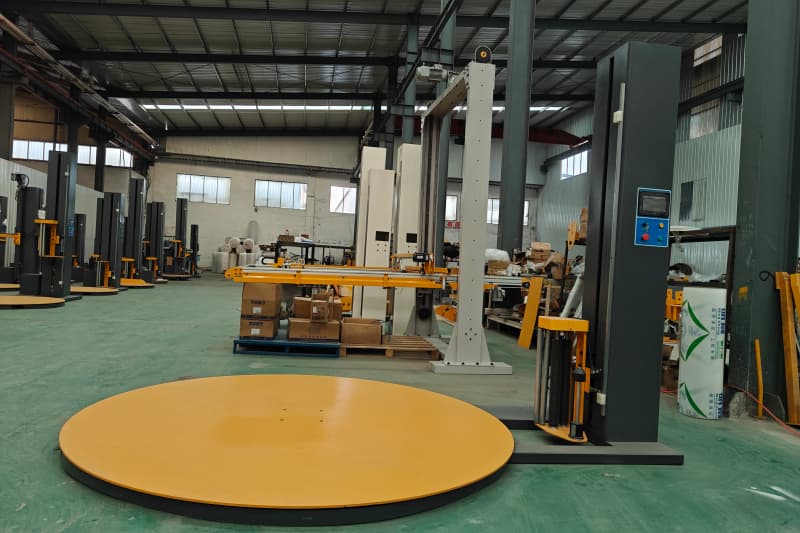
A pallet wrapping film machine is typically called a pallet wrapper or stretch wrapping machine.1 These terms are interchangeable and refer to equipment designed to apply stretch film around palletized loads for stability during storage or transport.
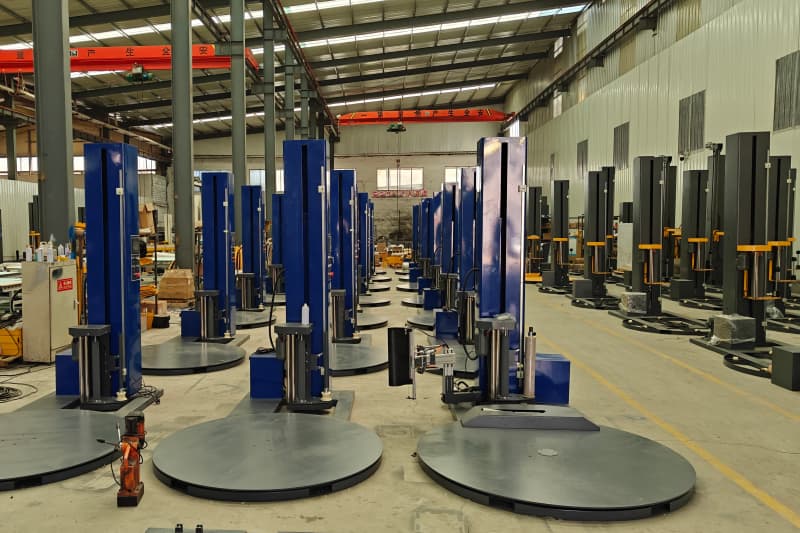
Selecting the right machine involves more than recognizing the name. You should assess factors like load size, operational frequency, labor availability, and whether manual, semi-automatic, or automatic configurations fit your needs better. Let’s dive deeper into terminology, machine types, and their suitability to different operational requirements.
What’s the proper name for a pallet wrapping film machine?
It’s a common issue among buyers to ask for "pallet wrapping film machines" without knowing the exact technical term.
The proper name for a pallet wrapping film machine is a pallet wrapper or stretch wrapping machine. These terms are widely used by suppliers and industry professionals. Some may also refer to this equipment as "stretch film machinery" or "stretch wrappers."
It’s important not to confuse pallet wrappers with shrink wrapping machines.2 While both involve securing loads with plastic films, shrink wrappers use heat to shrink the material tightly around a product, whereas stretch wrappers apply tension to stretch film without heat.
Common synonyms for pallet wrapping machines include:
- Stretch wrapper
- Film wrapping machine
- Rotary arm wrapper (a specific type of stretch wrapper)
Having clarity on proper terminology can avoid miscommunications during supplier inquiries or initial consultations.
What are the types of pallet wrapping film machines?
Customers frequently struggle to understand the different machine types when researching pallet wrapping film equipment.
Pallet wrapping machines come in three main types: manual, semi-automatic, and automatic.3 Each type addresses different operational needs, from low-volume manual operations to high-volume automated processes.
Comparing machine types
Here’s a breakdown of the three key configurations:
| Type | Features | Best For |
|---|---|---|
| Manual Machines | Requires full operator involvement for wrapping. | Low-volume operations or tight budgets. |
| Semi-Automatic | Uses motorized platforms but requires manual film placement. | Medium-volume manufacturers. |
| Fully Automatic | Automates film application and other functions entirely. | High-volume facilities prioritizing speed and labor savings. |
Choosing the right type
The choice depends on several factors:
- Load size and frequency: Larger operations benefit from semi-automatic or automatic machines, while manual ones may suffice for occasional wrapping.
- Space constraints: Automatic machines often require more installation space due to conveyor integration.4
- Budget considerations: While automation reduces labor costs, it involves higher upfront investment.
Based on my experience, budget-conscious buyers often begin with semi-automatic machines and upgrade as their operational needs grow.
Why should compatibility with load types matter?
Operational demands go far beyond machine type. Customers must ensure the machine suits their load sizes and pallet types.
Load compatibility is critical to choosing the right pallet wrapping film machine, as different machines handle load weights, sizes, and formats differently.5

Key compatibility factors
When evaluating pallet wrapping machines, consider:
- Load stability: Machines designed for large or irregularly shaped pallets often feature tension-adjustment settings.6
- Film requirements: High-performance machines may support specialty stretch films for heavier loads.7
- Turntable size: Ensure that the machine’s turntable accommodates your pallet dimensions.
For example, I once worked with a customer struggling with top-heavy pallet loads. They initially selected a turntable machine that lacked upward-extension capabilities, leading to inconsistent wrapping. After consulting on their operation, we recommended a rotary arm wrapper, which resolved the issue.
How do operational demands influence pallet wrapping machine selection?
Not all machines suit every operation, and many buyers overlook how their specific packaging process influences machine choice.
Operational demands like labor availability, wrapping frequency, and load diversity should strongly inform the selection of a pallet wrapping film machine.8
Matching machines to demands
Here’s how operational needs align with machine selection:
- Wrapping frequency: High-frequency operations benefit from automation, while smaller companies may rely on semi-automatic machines.
- Labor constraints: Facilities with limited manpower often choose automatic solutions to reduce operator involvement.
- Product diversity: Variable pallet loads may require adjustable tension or film settings.
Consider the example of a multi-product manufacturer managing both small and oversized pallets. To handle diverse loads efficiently, they opted for a semi-automatic machine offering adjustable film tension and settings for various pallet sizes.
How can suppliers help you choose the right machine?
Once you’ve identified your operational needs, collaborating with suppliers is an essential step in narrowing down your options.
Qualified suppliers provide valuable insights into selecting pallet wrapping machines, helping you evaluate specifications, compatibility, and cost-effectiveness.9
Supplier support services
Key services you should expect from reliable suppliers include:
- Equipment testing: Pre-shipment testing ensures operational consistency.
- Customization options: For unique loads or space constraints.
- Technical guidance: Remote or on-site assistance for installation and use.
In my experience, one of the most effective approaches involves sharing your operational requirements, load details, and budget with a supplier. By doing this, they can suggest features like automatic film cutting or load-stretch analysis tailored to your needs.
Frequently Asked Questions
Are pallet wrappers and shrink wrappers the same?
No. Pallet wrappers use stretch film and tension to secure loads, while shrink wrappers use heat to shrink film tightly around items.
Is a semi-automatic machine sufficient for most operations?
Yes, typically. Semi-automatic pallet wrapping machines strike a balance between affordability and efficiency, especially for medium-volume businesses.
How much does a pallet wrapping machine cost?
Prices vary by type:
- Manual machines: $1,000–$3,000.
- Semi-automatic machines: $5,000–$12,000.
- Fully automatic machines: $20,000+ depending on features and customization.
What’s the lifespan of a pallet wrapper?
With proper maintenance, most pallet wrapping machines last 5–10 years, depending on usage and build quality.
Conclusion
Pallet wrapping film machines, commonly called pallet wrappers or stretch wrapping machines, are essential tools for securing palletized loads. Choosing the right machine requires assessing load compatibility, operational demands, and budget constraints. Collaborating with reliable suppliers can further simplify your decision process.
If you're ready to explore packaging machinery, reach out today to discuss your operational needs. Let me help you find efficient, cost-effective solutions tailored to your specific requirements!
"Shrink wrap", https://en.wikipedia.org/wiki/Shrink_wrap. According to Wikipedia, 'pallet wrapper' and 'stretch wrapping machine' are commonly used terms for equipment that applies stretch film to palletized loads, though regional variations in terminology may exist. Evidence role: definition; source type: encyclopedia. Supports: The interchangeable use of 'pallet wrapper' and 'stretch wrapping machine' as industry-standard terms.. Scope note: Terminology may vary by region or supplier. ↩
"the effect of stretch wrap pre-stretch on", https://digitalcommons.calpoly.edu/cgi/viewcontent.cgi?referer=&httpsredir=1&article=1903&context=theses. Wikipedia explains that pallet wrappers use stretch film and tension, while shrink wrapping machines use heat to shrink film tightly around items. Evidence role: definition; source type: encyclopedia. Supports: The distinction between pallet wrappers and shrink wrapping machines.. Scope note: Descriptions may lack detailed technical specifications. ↩
"Post-wrapping behavior of high-performance stretch film", https://repository.rit.edu/cgi/viewcontent.cgi?article=1130&context=japr. Educational resources on packaging machinery confirm the classification of pallet wrapping machines into manual, semi-automatic, and automatic types, tailored to varying operational scales. Evidence role: general_support; source type: education. Supports: The classification of pallet wrapping machines into manual, semi-automatic, and automatic types based on operational needs.. Scope note: Specific features may differ across manufacturers. ↩
"Unit Load Containment", https://unitload.vt.edu/facilities/pallet-testing-lab/unitload-containment.html. Educational resources on industrial machinery installation note that automatic pallet wrappers often require additional space for conveyor integration. Evidence role: mechanism; source type: education. Supports: The spatial requirements for installing automatic pallet wrapping machines with conveyor systems.. Scope note: Space requirements may vary based on machine design. ↩
"Investigation of Fundamental Relationships to Improve the ...", https://vtechworks.lib.vt.edu/bitstream/handle/10919/73556/Park_J_D_2015.pdf?sequence=. Research studies on packaging machinery highlight that load compatibility, including weight and size, is a critical factor in machine selection to ensure operational efficiency. Evidence role: mechanism; source type: research. Supports: The importance of load compatibility in selecting pallet wrapping machines.. Scope note: Specific compatibility features may vary by machine model. ↩
"Effect of Time and Temperature on Stretch Wrap", https://unitload.vt.edu/research/undergraduate-research/recent-undergraduate-research/undergraduate-research-temperature-stretchwrap.html. Research on packaging machinery features confirms that tension-adjustment settings are standard in machines designed for irregularly shaped or large pallets. Evidence role: mechanism; source type: research. Supports: The inclusion of tension-adjustment settings in machines for large or irregularly shaped pallets.. Scope note: Feature availability may depend on machine type and manufacturer. ↩
"the effect of stretch wrap pre-stretch on", https://digitalcommons.calpoly.edu/cgi/viewcontent.cgi?referer=&httpsredir=1&article=1903&context=theses. Research on stretch film technology indicates that high-performance pallet wrapping machines are designed to accommodate specialty films for securing heavy loads. Evidence role: mechanism; source type: research. Supports: The compatibility of high-performance pallet wrapping machines with specialty stretch films for heavier loads.. Scope note: Compatibility may depend on film type and machine model. ↩
"Effect of Time and Temperature on Stretch Wrap", https://unitload.vt.edu/research/undergraduate-research/recent-undergraduate-research/undergraduate-research-temperature-stretchwrap.html. Institutional guidelines on packaging machinery emphasize that labor availability, wrapping frequency, and load diversity are critical factors in selecting appropriate equipment. Evidence role: expert_consensus; source type: institution. Supports: The role of operational demands in influencing pallet wrapping machine selection.. Scope note: Recommendations may vary based on industry-specific needs. ↩
"The Total Package: ITA Helps Packaging Machinery ...", https://www.trade.gov/success-story/total-package-ita-helps-packaging-machinery-reflect-excellence-design. Educational resources on supply chain management highlight the importance of supplier expertise in evaluating machinery specifications and compatibility. Evidence role: general_support; source type: education. Supports: The role of suppliers in providing insights and guidance for selecting pallet wrapping machines.. Scope note: Supplier capabilities may vary by region and industry. ↩